Where Do Bed Bugs Come From? Origins, Causes & Prevention Guide
You check into a hotel, unpack your bag, and wake up with itchy red bites. That’s often how the story starts. Bed bugs have been riding along with humans for centuries, and understanding where they come from is the first step to keeping them out of your home. This guide traces their journey from natural hiding spots to your bedroom, backed by public-health authorities.
Number of bed bug species that bite humans: 2 (Cimex lectularius and Cimex hemipterus) ·
Average length of a bed bug (adult): 4–5 mm ·
Typical feeding interval for bed bugs: Every 5–10 days ·
How long bed bugs can survive without a blood meal: 2–3 months (up to a year in cool conditions) ·
Most common places bed bugs hitchhike from: Hotels, dorm rooms, used furniture, and luggage
Quick snapshot
- Small parasitic insects (Cimex lectularius) — nocturnal and feed on blood (US EPA (regulatory agency))
- Flat body allows hiding in thin cracks and crevices (US EPA (regulatory agency))
- Travel and lodging: hotels, motels, hostels (US EPA (regulatory agency))
- Used furniture and mattresses (Health PEI (public health authority))
- Adjacent apartments in multi-unit buildings (Health PEI (public health authority))
- Can go months without feeding (US EPA (regulatory agency))
- Resistant to many pesticides (US EPA (regulatory agency))
- Hide in hard-to-reach places (US EPA (regulatory agency))
- Inspect secondhand items before bringing indoors (US EPA (regulatory agency))
- Check hotel bed frames and headboards (US EPA (regulatory agency))
- Encase mattresses and box springs (US EPA (regulatory agency))
- Reduce clutter near sleeping areas (US EPA (regulatory agency))
Six key facts about bed bug biology, all confirmed by public-health sources:
| Attribute | Value |
|---|---|
| Scientific name (most common) | Cimex lectularius |
| Adult size | 4–5 mm (size of an apple seed) |
| Life cycle length | Approximately 4–6 weeks (egg to adult) |
| Number of eggs per female | 200–500 in a lifetime |
| Time to feed | 3–10 minutes per blood meal |
| Preferred feeding time | 1–2 hours before dawn |
What causes bed bugs to start?
Most people assume bed bugs are a sign of dirty homes, but the truth is more about movement than mess. The primary driver is human travel.
Travel as primary cause
- Bed bugs are excellent hitchhikers that climb into luggage, purses, backpacks, and clothing while you’re away from home (US EPA (regulatory agency)).
- Staying in hotels, motels, or hostels creates the highest risk of picking them up (U.S. government publication (consumer guidance)).
Used furniture and secondhand goods
- Bringing used furniture, especially mattresses and couches, into the home is a common way to introduce bed bugs (Health PEI (public health authority)).
- Even secondhand beds and box springs can carry hidden infestations.
Apartment buildings and shared walls
- In multi-unit buildings, bed bugs can travel through wall voids, electrical outlets, and pipe chases from one apartment to the next (Health PEI (public health authority)).
Travelers and secondhand shoppers are the main vectors. The pattern: bed bugs don’t appear spontaneously — they arrive with people and their belongings.
Where do bed bugs come from in the house?
Once inside, bed bugs don’t wander far from where people sleep. They prefer dark, tight spaces near the bed.
Where do bed bugs hide on your body?
- Bed bugs do not typically live on human bodies. They feed and then retreat to hiding spots (National Pesticide Information Center (university-based extension)).
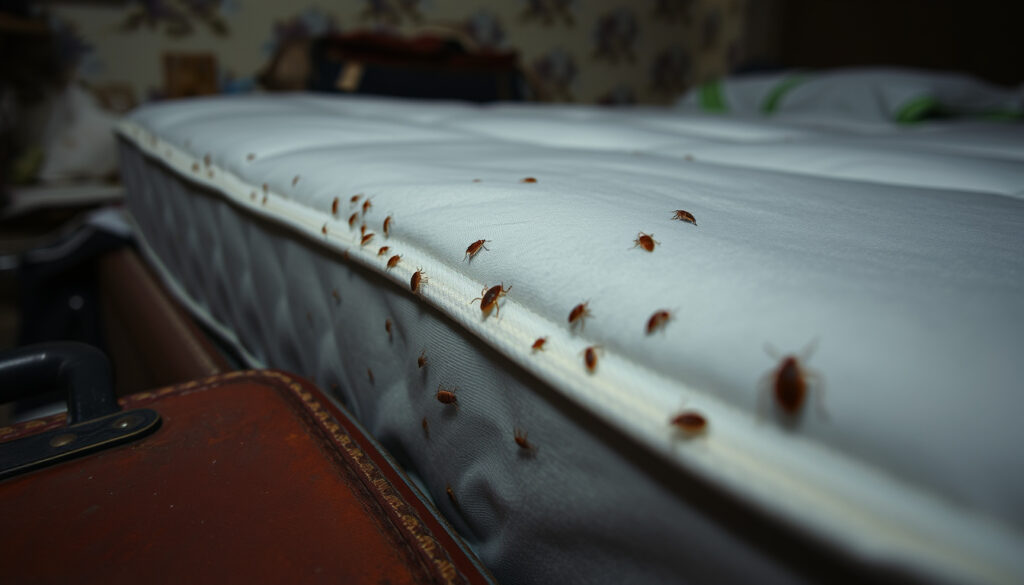
- They are most likely to be found in mattress seams, box springs, bed frames, and headboards.
Can bed bugs live on pillows?
- Yes, pillows that are not encased can harbor bed bugs in the seams and folds (US EPA (regulatory agency)).
- Using zippered, bed-bug–proof encasements on pillows and mattresses eliminates common hiding spots.
Where do bed bugs come from on a mattress?
- Mattress seams, tags, and tufts are prime hiding places. Box springs — especially the fabric-covered underside — are even more common harborage sites (US EPA (regulatory agency)).
The bedroom is ground zero. Concentrating inspection and treatment on the bed and its frame gives the highest return on effort.
Do bed bugs come from outside?
Unlike ants or cockroaches, bed bugs rarely enter from the outdoors. They are not attracted to open windows or gardens.
Can bed bugs travel from neighbors?
- In apartment complexes, bed bugs easily migrate through walls, electrical conduits, and shared plumbing (Health PEI (public health authority)).
- This is why infestations often spread to multiple units in the same building.
Do bed bugs come from bird nests or bats?
- In rare cases, bed bugs — especially bat bugs (Cimex adjunctus) — can originate from bat roosts or bird nests in attics or eaves. Once the primary host leaves, they may wander into living spaces.
- However, the common bed bug (Cimex lectularius) is almost exclusively associated with human dwellings.
For most homeowners, the source is not the yard — it’s the hotel room, the used furniture store, or the neighbor’s apartment.
What kills bed bugs instantly?
When people discover an infestation, they want immediate relief. But instant kill is harder to achieve than internet claims suggest.
How to get rid of bed bugs
- Professional heat treatment raises the temperature above 120°F (49°C), which kills all life stages in a single session (US EPA (regulatory agency)).
- Steam cleaning at 212°F (100°C) kills bed bugs and eggs on contact on surfaces.
- Insecticide sprays often require hours to days and may not kill eggs, requiring multiple treatments.
What causes bed bugs to die
- High heat (above 122°F) is the most reliable instant killer. Cold below 0°F for several days can also kill them, but is less practical.
- Drying clothing on the highest heat setting for 30 minutes after travel kills any hitching bed bugs (National Pesticide Information Center (university-based extension)).
Home remedies like rubbing alcohol or diatomaceous earth are slow and unreliable. Heat treatment is the gold standard for immediate results.
Are bed bugs due to poor hygiene?
This is one of the most persistent myths. Bed bugs are not attracted to dirt or food crumbs — they are attracted to blood.
How to prevent bed bugs
- Inspect secondhand furniture and mattresses thoroughly before bringing them indoors (US EPA (regulatory agency)).
- When traveling, use luggage racks and keep bags off the bed and floor (U.S. government publication (consumer guidance)).
- After returning from a trip, inspect luggage before bringing it into the home and dry all clothing on high heat for 30 minutes (National Pesticide Information Center (university-based extension)).
- Vacuum frequently and immediately dispose of the vacuum bag outside (US EPA (regulatory agency)).
- Encase mattresses and box springs in bed-bug-proof covers.
Cleanliness matters for detection, not prevention. A spotless home can still get bed bugs — the difference is you’ll spot them earlier.
What time of year is worst for bed bugs?
Seasonal patterns matter for prevention, but bed bugs don’t take a winter break.
Are bed bugs worse in summer or winter?
- Summer travel peaks (June–August) increase the risk of introducing bed bugs into homes (US EPA (regulatory agency)).
- Winter does not reduce populations — heated homes keep bed bugs active year-round.
- There is no seasonal die-off; activity continues as long as hosts are available.
The risk is highest after summer travel, but inspections should be a year-round habit.
How to prevent bed bugs: step-by-step guide
- Inspect before you bring it in. Check secondhand furniture, especially beds and couches, for signs like rust-colored stains, shed skins, or live bugs (US EPA (regulatory agency)).
- Travel smart. Use luggage racks, keep bags off the bed, and inspect the hotel room’s headboard and mattress seams (U.S. government publication (consumer guidance)).
- Post-trip routine. Dry all clothing on the highest heat setting for 30 minutes before washing or storing (National Pesticide Information Center (university-based extension)).
- Vacuum often. Vacuum mattresses, baseboards, and furniture regularly; empty the canister or bag outside (US EPA (regulatory agency)).
- Encase. Use zippered, bed-bug–proof covers on mattresses and box springs to trap existing bugs and prevent new ones from hiding.
- Seal cracks. Caulk baseboards, electrical plates, and pipe gaps to reduce hiding spots.
- Monitor. Install bed bug interceptors under bed legs to catch any that try to climb up.
Timeline: bed bug resurgence
- Pre-1940s: Bed bugs were common in the U.S. and Europe, associated with travel and temporary lodging.
- 1940s–1950s: Introduction of DDT and other synthetic insecticides led to near eradication in developed countries.
- 1970s–1980s: Reduced use of strong residual insecticides, increased international travel, and pesticide resistance began resurgence.
- 1990s–2010s: Major resurgence in urban centers worldwide; bed bugs became common in hotels, movie theaters, and public transit.
- 2010s–present: Heat treatments, advanced monitoring, and integrated pest management (IPM) became standard; bed bugs remain a top concern for pest control operators.
Confirmed facts vs. what’s unclear
Confirmed facts
- Bed bugs are not caused by poor hygiene or dirt. (US EPA (regulatory agency))
- Travel is the number-one driver of new infestations. (U.S. government publication (consumer guidance))
- Heat above 120°F kills all life stages. (US EPA (regulatory agency))
- Bed bugs can live in pillow encasements, mattress seams, and box springs.
What’s unclear
- The exact emergence timeline of pesticide resistance in different regional populations is not fully mapped.
- The role of bird and bat nests as ongoing outdoor reservoirs remains under-studied.
Expert perspectives
“Bed bugs can come from other infested areas or from used furniture. They can hitch a ride in luggage, purses, backpacks, or other items.”
— New York State Department of Health (public health authority)
“Travel and staying in hotels are the top cause of infestations.”
— Rentokil Pest Control (global pest management company)
“Bed bugs usually come from places where people sleep or rest for long periods, such as hotels, motels, dorm rooms, and apartment buildings.”
— Orkin Pest Control (national pest management provider)
For anyone who travels or buys secondhand furniture, the choice is clear: inspect and treat proactively, or risk a costly, stressful infestation. A few minutes of prevention can save weeks of treatment.
epa.gov, archive.epa.gov, nepis.epa.gov, home.howstuffworks.com, epa.gov, epa.gov, epa.gov, home.lps.org
Frequently asked questions
Where do bed bugs hide during the day?
They hide in mattress seams, box springs, bed frames, headboards, and any crack or crevice near the bed — including behind wallpaper, baseboards, and furniture joints.
How can I tell if I have bed bugs?
Look for rust-colored stains on sheets, dark spots (fecal matter), shed skins, or live bugs. Bites often appear in a line or cluster on exposed skin.
What is the fastest way to get rid of bed bugs?
Professional heat treatment is the fastest method, killing all life stages in a single session. Steam cleaning and high-heat drying of infested items also work immediately.
Do bed bugs live in clothes?
Bed bugs can hide in clothing left on the floor or in luggage, but they do not live on people. They prefer to stay close to the bed.
What natural repellents work against bed bugs?
Essential oils like tea tree, lavender, and peppermint may repel bed bugs but are not reliable for eradication. Heat and steam are the only proven non-chemical killers.
Are bed bug bites dangerous to health?
Bites are generally not dangerous but can cause itchy welts and secondary infections from scratching. Severe allergic reactions are rare.
How often should I treat my home for bed bugs?
If you have an active infestation, treat every 7–14 days until no signs remain. Preventive inspections after travel should be done each time you return.
More related posts
 Capital One Checking Account: Fees, Minimums, Pros & Cons (2026)
 Bears vs Ravens Match Player Stats: Oct 26, 2025
 Oscar De La Hoya: Net Worth, Face Injury & Boxing Legacy
 RV Dealers Near Me: Find Local Motorhome Sales & Expert Tips
 IRS Direct Deposit November 2025: Relief & Phaseout
 Energy Transition News Today: Trends, Investment & Market Updates
 David Corenswet Movies and TV Shows – Full Filmography Guide
 What Is Celebrated Today? Key Dates & Observances Explained
