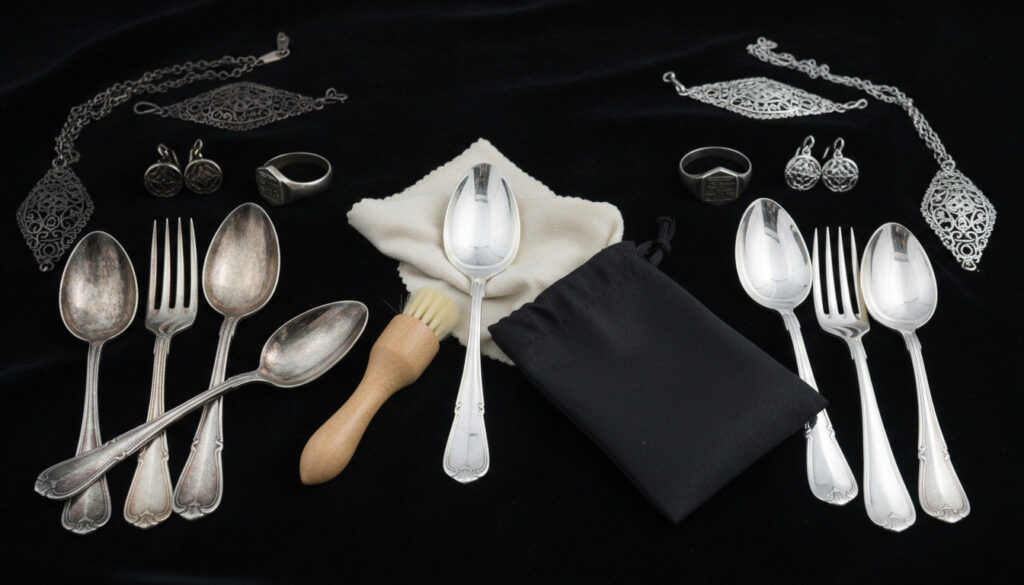
Does Sterling Silver Tarnish – Causes, Prevention and Cleaning Guide
Sterling silver jewelry inevitably develops a dark, sometimes blackish surface film over time. This phenomenon, known as tarnish, results from a chemical reaction between the metal’s alloy components and environmental sulfur compounds.
Composed of 92.5% pure silver and 7.5% copper, sterling silver corrodes faster than pure silver due to copper’s reactivity. The discoloration is not merely dirt but a layer of silver sulfide forming on the surface. Does 925 Sterling Silver Tarnish clarifies that this process is natural and unavoidable given the alloy’s composition.
Jewelry houses including Tiffany & Co. and John Hardy emphasize that while tarnish is unavoidable, proper storage and care significantly delay its onset.
Does Sterling Silver Tarnish?
- All sterling silver tarnishes eventually. The 7.5% copper content in 925 silver guarantees eventual corrosion when exposed to sulfur compounds.
- Sulfur triggers the chemical reaction. Hydrogen sulfide in air forms silver sulfide (Ag₂S) on the surface.
- Humidity accelerates the process. Moisture facilitates electrochemical reactions between silver and airborne contaminants.
- Wearing jewelry slows tarnish. Natural skin oils polish the surface during regular movement.
- Tarnish is corrosion, not dirt. The black layer represents actual metal degradation rather than surface grime.
- Pure silver resists longer. Fine silver (99.9%) lacks copper and tarnishes at a slower rate.
- Gold remains inert. Unlike silver alloys, gold does not form sulfides or corrode under normal conditions.
| Property | Details |
|---|---|
| Composition | 92.5% silver, 7.5% copper source |
| Tarnish Agent | Sulfur compounds (H₂S) |
| First Appearance | Yellowish or grayish dulling |
| Timeline in Humid Climates | 2-4 weeks for initial spotting |
| Copper’s Role | Accelerates sulfide formation |
| Reversibility | Yes, via chemical or mechanical removal |
Why Does Sterling Silver Tarnish?
What causes black tarnish on sterling silver?
Black tarnish on sterling silver is silver sulfide, a compound formed when silver atoms bond with sulfur. Material science explanations confirm that copper within the alloy corrodes alongside silver, promoting faster sulfide formation than occurs with pure silver alone.
Common sulfur sources include rubber bands, leather goods, cellophane, printed paper dyes, eggs, onions, exhaust fumes, and cosmetics. Individual body chemistry varies; some wearers find their silver tarnishes rapidly due to skin pH and perspiration composition.
Household items containing sulfur include wool, felt, rubber gloves, latex, and certain fabric dyes. Storing silver wrapped in these materials accelerates blackening within days.
Does sterling silver tarnish in water?
Water itself does not instantly tarnish silver, but moisture facilitates the electrochemical reaction between silver and ambient sulfur. Shower steam introduces humidity, while chlorinated pools and saltwater introduce corrosive chemicals. Celtic Elegance notes that ocean salt and pool chlorine pit the metal surface while accelerating sulfide formation.
Chlorine bleach and pool water cause irreversible pitting in sterling silver beyond simple surface tarnish. Never swim or bathe while wearing silver jewelry.
How to Prevent Sterling Silver from Tarnishing
Can you wear sterling silver in the shower?
Experts recommend removing sterling silver before showering. Steam increases humidity around the metal, while soap residues and shampoo chemicals create a film that traps sulfur compounds against the surface. Reasons why your silver jewelry is tarnishing and ways to prevent it advises putting silver on last after applying lotions, perfumes, and hairspray.
Is there tarnish-proof sterling silver?
No alloy is truly tarnish-proof, though rhodium plating creates a temporary barrier. Taba Silver explains that rhodium, a platinum-group metal, resists sulfur and moisture. However, plating wears away at friction points within months, exposing the silver beneath to normal tarnish. As detailed in Does 925 Sterling Silver Tarnish, this exposure returns the piece to its natural tarnishing cycle.
Storage strategies prove more reliable than coatings. Anti-tarnish strips containing activated carbon absorb sulfur from sealed containers. Silica gel packets eliminate humidity. Chalk or charcoal pieces serve as inexpensive desiccants in jewelry boxes.
How to Clean Tarnished Sterling Silver
How to polish sterling silver at home?
Early tarnish responds to mild dish soap and warm water with a soft brush. For moderate blackening, the aluminum foil method reverses the chemical reaction: line a bowl with foil (shiny side up), add baking soda and boiling water, then submerge the jewelry. Tarnish transfers from silver to the aluminum via ion exchange.
Create a paste using three parts baking soda to one part water. Apply with a soft cloth using gentle circular motions. Rinse thoroughly and dry immediately to prevent water spots.
Commercial silver polishing cloths containing micro-abrasives restore shine without scratching. Tiffany’s care guidelines recommend avoiding dips and ultrasonic cleaners for plated pieces, as these remove protective coatings along with tarnish.
Heavy tarnish buildup over years requires professional buffing. Jewelers use mild abrasives and polishing compounds that restore original luster without removing metal mass.
How Long Does It Take for Sterling Silver to Tarnish?
- New: Bright, reflective finish with mirror-like quality.
- Week 1: Slight yellowing or clouding in high-humidity environments or near sulfur sources.
- Month 1: Distinct black spots appear on raised surfaces and contact points.
- Prolonged: Heavy, uniform black coating that may require chemical or professional removal.
Does Sterling Silver Tarnish Faster Than Gold?
| Established Facts | Uncertain Variables |
|---|---|
| Sterling silver always tarnishes eventually due to copper-sulfur reactivity. | Exact tarnish speed varies by individual body chemistry and skin pH. |
| Copper accelerates corrosion compared to pure silver. | Specific sulfur exposure levels in any given room or climate. |
| Gold (especially 18k+) does not form sulfides or corrode. | Threshold humidity percentage that triggers rapid tarnish in individual pieces. |
| Regular wear polishes silver via mechanical abrasion from skin contact. | Long-term effects of specific cosmetic ingredients on individual alloys. |
What Is the Chemistry Behind Sterling Silver Tarnish?
Sterling silver is an alloy containing 92.5% silver and 7.5% copper by weight. Metallurgical standards define this ratio as optimal for durability, though the copper introduces electrochemical vulnerability.
When exposed to hydrogen sulfide (H₂S) in air, silver atoms undergo reduction-oxidation: 2Ag + H₂S → Ag₂S + H₂. The resulting silver sulfide appears as black tarnish. Copper within the alloy creates galvanic cells that facilitate this reaction, explaining why 925 silver tarnishes faster than fine silver (99.9% Ag).
What Do Jewelry Experts Recommend for Silver Care?
“Sterling silver tarnishes simply by being exposed to air. To minimize this, store silver in a cool, dry place away from sunlight, and keep pieces separated to avoid scratching.”
— Tiffany & Co. Client Services
“Remove jewelry before swimming, bathing, or exercising. Chlorine, salt water, and perspiration accelerate tarnish and may cause irreversible pitting.”
— John Hardy Jewelry Care
How to Maintain Sterling Silver Long-Term
Consistent daily habits preserve sterling silver’s appearance longer than intermittent deep cleaning. Remove rings before washing hands, apply cosmetics before dressing, and store pieces in sealed containers with anti-tarnish strips. Regular wearing prevents tarnish buildup through natural polishing action, while annual professional inspections address developing corrosion before it becomes severe.
Frequently Asked Questions
Does sterling silver turn your skin green?
Copper in sterling silver can react with skin acids, leaving a green residue. This harmless discoloration washes off with soap and indicates chemical interaction rather than true tarnish.
Can you swim in sterling silver?
Chlorine and salt water accelerate tarnish and may pit the metal surface permanently. Experts advise removing all silver jewelry before swimming or entering hot tubs.
Is rhodium-plated silver tarnish-proof?
Rhodium plating creates a barrier preventing sulfur from reaching the silver surface. However, plating wears away with friction, eventually exposing the silver to normal tarnish.
Does hand sanitizer damage sterling silver?
Alcohol-based sanitizers rarely cause immediate tarnish, though repeated exposure to chemical residues may dull the finish over extended periods.
Can tarnished silver be restored to original shine?
Early-stage tarnish removes easily with baking soda or polishing cloths. Heavy corrosion built up over years may require professional buffing or ultrasonic cleaning.
More related posts
 AD Love Is Blind: Latest Updates on Ollie Marriage & Baby
 Dental Office Near Me: Top Choices in Sligo and Ireland
 McDonald’s Near Me: Find Locations, Hours, Menu & Prices
 Suns vs Mavericks Player Stats: Feb 10, 2026 Game
 What Is OneDrive – Cloud Storage Features, Plans and Security
 New Harry Potter Movie: What’s Really Happening in 2026?
 What Is a Vector Database? Definition and Uses
 Bengals vs Cleveland Browns Match Player Stats: Jan 4, 2026
