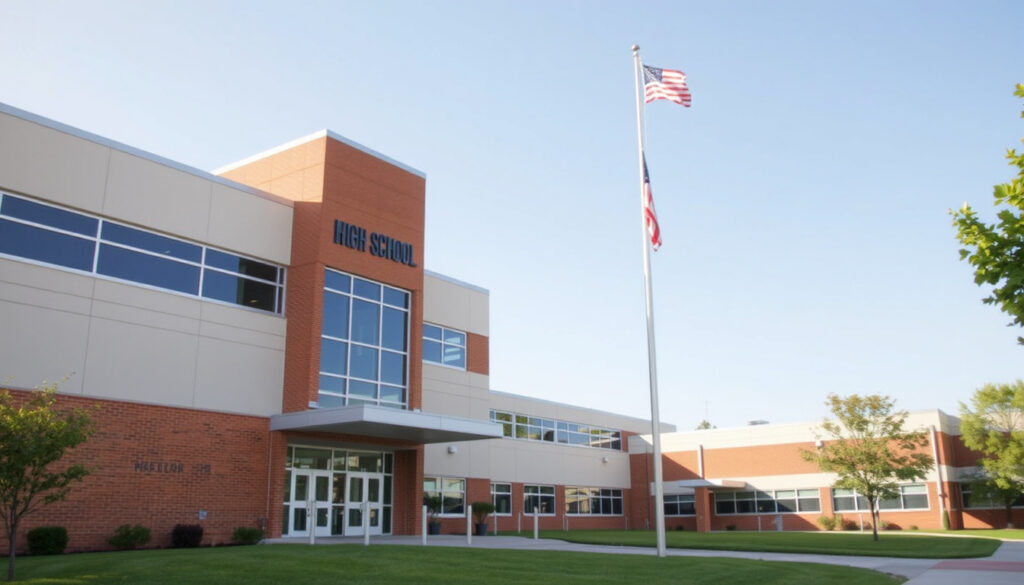
What Is Secondary School? Age, Country & Meaning
If you’ve ever tried to figure out where your child fits into the school system after primary, you’ve probably run into a tangle of terms — secondary school, high school, post-primary — that don’t always mean the same thing. This guide cuts through the confusion by comparing how three English-speaking countries define secondary school, when children start, and what names they use. Along the way, you’ll see why a 12-year-old in Ireland might still be in primary while their English cousin is already in Year 8.
Typical start age (UK): 11 · Typical start age (Ireland): 12–13 · Duration (UK): 5–7 years · Duration (Ireland): 5–6 years · Number of secondary schools in Ireland: over 700
Quick snapshot
- Stage after primary education (Wikipedia (encyclopedic reference))
- Ages 11–18 typically (OurKids.net (education comparison site))
- Also called high school or post-primary (Citizens Information Ireland (official guidance))
- Starts at 11 (NCES (US government education statistics))
- Ends at 16 (GCSE) or 18 (A-levels) (Peterson Office Ireland (education consultancy)) (NCES (US government education statistics))
- Includes grammar and comprehensive schools (UK Government (official school types guide))
- Starts at 12–13 (Greenheart Travel (cultural exchange guide))
- Junior Cycle (3 years) + Senior Cycle (2–3 years) (Peterson Office Ireland (education consultancy)) (Greenheart Travel (cultural exchange guide))
- Voluntary secondary schools dominate (Citizens Information Ireland (official school types))
- Grades 9–12, ages 14–18 (OurKids.net (education comparison site)) (Government of Canada (official education overview))
- Provincial control (Government of Canada (official education overview))
- Quebec has CEGEP as an extra step (OurKids.net (education comparison site)) (Government of Canada (official education overview))
The following table compares the three countries across key metrics.
| Feature | UK (England) | Ireland | Canada |
|---|---|---|---|
| Start age | 11 (NCES (US government education statistics)) | 12–13 (Greenheart Travel (cultural exchange guide)) | 14 (grade 9) (OurKids.net (education comparison site)) |
| Duration | 5–7 years (Peterson Office Ireland (education consultancy)) | 5–6 years (Peterson Office Ireland (education consultancy)) | 4 years (OurKids.net (education comparison site)) |
| Main leaving exam | GCSE (age 16) and A-levels (age 18) (NCES (US government education statistics)) | Junior Cert (age 15) and Leaving Cert (age 17–18) (Greenheart Travel (cultural exchange guide)) | Provincial diploma (typically grade 12) (Government of Canada (official education overview)) |
If you are a parent moving between these countries, the late start in Canada can mean your 13-year-old is still in elementary while their Irish peers are beginning secondary. That is not a delay — it is just a different system design.
What is the meaning of secondary school?
At its simplest, secondary school is the stage of formal education that follows primary school. It is designed for adolescents and typically covers ages 11 to 18, though the exact boundaries shift by country. In many parts of the world it is called high school, post-primary school, or simply “secondary” — and those labels often carry different meanings.
The core purpose is to prepare students for further education, vocational training, or direct entry into the workforce. This is where students begin to specialise in academic subjects, take national exams, and build the qualifications that shape their next steps. According to Wikipedia (encyclopedic reference), secondary education covers the period of compulsory schooling after primary and before tertiary education.
The pattern in many English-speaking systems: primary school ends around age 11 or 12, secondary begins the next school year, and compulsory attendance continues until at least age 16. That framework is common, but the internal structures — year names, exam stages, and elective options — vary widely.
A parent searching “secondary school” from Dublin finds a different timeline than one searching from Manchester. Without a cross-system map, it is easy to misread grade equivalents and miss application deadlines.
The implication: understanding these differences is essential for cross-system comparisons.
What is secondary school in the UK?
What do British people call high school?
In the United Kingdom, the term “secondary school” is the standard name for the stage after primary. While “high school” is used in some areas — particularly in Scotland and parts of Northern Ireland — the official national classification across England, Wales, and Northern Ireland is “secondary school.” The UK Government (official school types guide) lists secondary schools as one of the main categories, alongside primary, special, and independent schools.
Children typically start secondary school in Year 7, at age 11, and the first three years form Key Stage 3. At age 14–16 (Key Stage 4), students work toward GCSEs. After that, they can leave compulsory education or continue into sixth form (ages 16–18) to take A-levels. The NCES (US government education statistics) notes that upper secondary in England commonly includes a sixth form after GCSEs, with AS levels typically taken at age 17 and A2 at age 18.
Not all UK secondary schools are the same. The system includes comprehensive schools (non-selective), grammar schools (entry by exam), and independent (fee-paying) schools. As outlined by Peterson Office Ireland (education consultancy), England also has separate education systems for Scotland, Wales, and Northern Ireland, each with minor differences in curriculum and exam boards.
The implication: a British parent asking “What do you call high school?” gets “secondary school” as the standard answer, but the internal structure of years and exams is not uniform across the four nations.
What is a secondary school in Ireland?
How many years in secondary school Ireland?
What level of education is secondary school in Ireland?
In Ireland, the term “secondary school” is used interchangeably with “post-primary school.” The Citizens Information Ireland (official guidance) states that children usually start post-primary school when they are aged 12 or 13. The full cycle lasts 5 to 6 years, divided into a three-year Junior Cycle and a two- or three-year Senior Cycle. Many schools offer an optional Transition Year between the two cycles.
The Junior Cycle ends with the Junior Certificate (or Junior Cycle Profile of Achievement), typically taken at age 15. The Senior Cycle culminates in the Leaving Certificate, the main terminal exam for university entry, taken at age 17–18. According to Peterson Office Ireland (education consultancy), the Leaving Certificate is designed to keep a broad subject mix before university specialisation.
Ireland has over 700 secondary schools, the majority of which are voluntary secondary schools — often run by religious bodies but state-funded. As noted by Greenheart Travel (cultural exchange guide), the primary school a student attends does not determine their secondary school, and families can choose from single-sex, mixed, and Irish-language schools.
What this means: the Irish system gives students a later start than the UK, but also a chance for a Transition Year — a unique feature that allows exploration before exam-focused senior years.
Parents comparing Ireland and the UK should note that Irish students sit a high-stakes Leaving Certificate one year later than English students sit A-levels, which can shift university application timing and gap-year planning.
What this means: parents must account for the year gap in exam timing when planning university applications.
What is a secondary school in Canada?
In Canada, “secondary school” is officially called high school and typically covers grades 9 through 12, for students aged 14 to 18. However, because education is a provincial responsibility, the structure varies. For example, Ontario uses a four-year high school system (grades 9–12), while Quebec runs secondary school from grades 7 to 11 (Secondary I–V), followed by CEGEP, a pre-university college. The Government of Canada (official education overview) confirms that compulsory attendance typically ends at age 16 or 18, depending on the province.
Unlike the UK and Ireland, where national exams like GCSEs and the Leaving Certificate create a uniform metric, Canadian provinces each set their own graduation requirements and diplomas. The OurKids.net (education comparison site) highlights that the Canadian system is closer to the US model in its grade structure but differs in its lack of a nationwide standardised exit exam.
The catch: for families moving within Canada or from abroad, the transition between provincial systems can involve credit transfers and prerequisite checks — an extra layer of complexity that a national system would avoid.
Are secondary and primary the same?
Is a 12 year old in secondary school?
No — primary and secondary are distinct stages. Primary school (also called elementary school) covers early childhood and pre-adolescent education, usually from ages 4–5 up to 11–12. Secondary school begins immediately after, typically at age 11 in the UK and 12–13 in Ireland. In Canada, the split between elementary and secondary can occur at grade 7 or grade 9, depending on the province.
A 12-year-old is usually in secondary school in the UK (Year 8) but may still be in primary school in Ireland if their birthday falls late in the school year. The Citizens Information Ireland (official guidance) notes that children in Ireland typically start post-primary at age 12 or 13, so some 12-year-olds are in their final year of primary. In Canada, a 12-year-old is normally in grade 7, which is often still considered elementary or middle school.
The pattern: primary education focuses on foundational literacy, numeracy, and social skills. Secondary shifts toward subject-specific instruction, exam preparation, and career orientation. They are not the same stage, and the boundary age varies by country.
Post-primary school is also called ‘secondary’ school. Children usually start post-primary school when they are aged 12 or 13.
— Citizens Information Ireland (official public service information)
In the UK, secondary school refers to the stage of education that follows primary school. It usually begins at age 11 and continues to either age 16 or 18.
Confirmed facts
- Secondary school follows primary school in most education systems (Wikipedia (encyclopedic reference)).
- In Ireland, post-primary school is officially called secondary school (Citizens Information Ireland (official guidance)).
- In the UK, secondary school starts at age 11 (NCES (US government education statistics)).
What’s unclear
- Exact age boundaries vary by region and school type (OurKids.net (education comparison site)).
- Some countries use ‘high school’ interchangeably with ‘secondary school’ without a standard definition across jurisdictions (OurKids.net (education comparison site)).
For parents in Ireland navigating the post-primary options, the choice is clear: understand the Junior Cycle and Senior Cycle structure, or risk missing the timing for Transition Year. For UK families, the main decision is between comprehensive, grammar, or independent — but the start age is fixed. For Canadians moving provinces, the lack of a unified system means checking transfer policies well before grade 9. In all three countries, the term “secondary school” is not a global constant; it is a local contract between age, exam, and opportunity.
Related reading: St. Michael the Archangel – Prayer, Patron Saint, Schools
For a broader perspective on how secondary education is structured worldwide, see this global overview of secondary school that compares ages and grades across different countries.
Frequently asked questions
What subjects are taught in secondary school?
The core curriculum usually includes English, mathematics, science, history, geography, a modern language, physical education, and sometimes religious education. Electives such as art, music, technology, and business studies are common from Year 9 onward.
Is secondary school mandatory?
In the UK, Ireland, and Canada, secondary education is compulsory until at least age 16. Some provinces in Canada require attendance until age 18.
What is the difference between secondary school and high school?
In most English-speaking countries, the terms are used interchangeably. However, in the US, “high school” usually refers to grades 9–12, while “secondary school” can include middle school (grades 6–8) in some contexts.
Can a 12-year-old be in primary school?
Yes, in Ireland a 12-year-old may still be in primary if their birthday falls after the school start cut-off. In the UK, children turn 11 during Year 7, so a 12-year-old is normally in secondary school.
What is a secondary school diploma?
It is the certificate awarded upon completion of secondary education. In Ireland it is the Leaving Certificate, in the UK it is GCSEs (and A-levels for higher entry), and in Canada it is a provincial high school diploma.
How do I choose a secondary school in Ireland?
Consider factors such as school ethos (voluntary, community, or vocational), whether it offers Transition Year, the mix of single-sex versus co-education, Irish-language options, and proximity. Open days and league tables (available from the Department of Education) can help narrow choices.
More related posts
 Colts Cut Ties with QB: Rypien Waived Amid Richardson Rumors
 Capital One Auto Loan: Rates, Login, Phone & Reviews
 Bears vs Ravens Match Player Stats: Oct 26, 2025
 Green Noise for Sleep – Softer Nature Sounds for Rest
 Right Side Chest Pain: Causes and When to Worry
 Where Do Bed Bugs Come From? Origins, Causes & Prevention Guide
 Cast of May December – Full list, characters, and plot
 Is Tomorrow a Holiday? Ireland, UK & Northern Ireland
