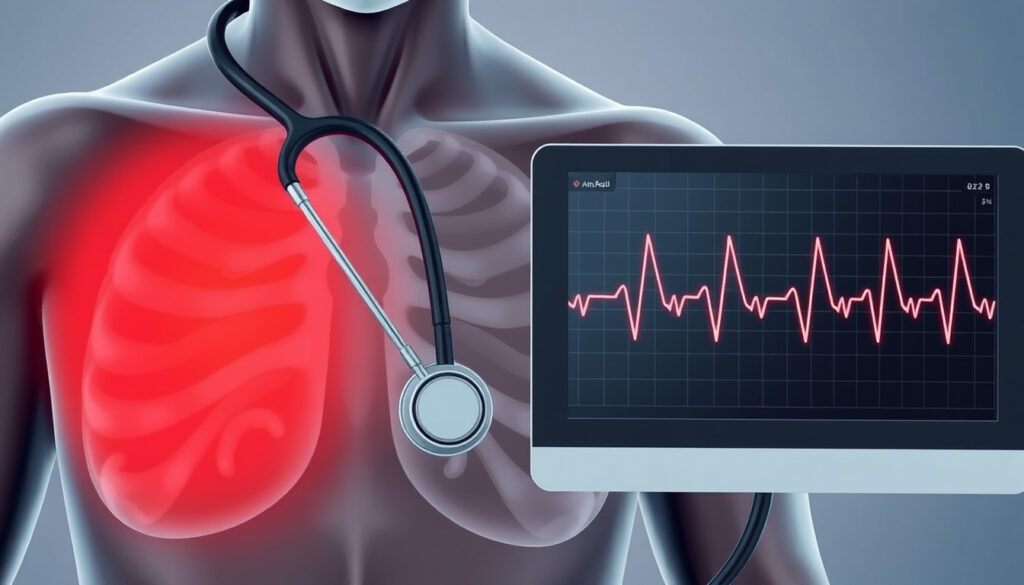
Right Side Chest Pain: Causes and When to Worry
Anyone who’s felt a sudden stab or dull ache on the right side of the chest knows how quickly the mind jumps to the worst-case scenario, but most right-sided chest pain comes from muscles, lungs, or digestion, not from a heart attack. That said, knowing which symptom clusters point to a true emergency and which are likely harmless can literally save your life — or save you an unnecessary trip to the ER.
Prevalence of right-sided chest pain complaints: Accounts for approximately 10-15% of all emergency department chest pain visits ·
Common non-cardiac cause: Musculoskeletal issues (muscle strain, costochondritis) are responsible for up to 50% of cases ·
Cardiac involvement: Only about 5-10% of right-sided chest pain is due to a heart attack ·
Pneumonia as a cause: Right lower lobe pneumonia can cause right-sided pleuritic chest pain in 20-30% of lung infection cases ·
Golden hour for heart attack treatment: Clot-busting drugs or angioplasty within 60 minutes of symptom onset significantly reduces mortality
Quick snapshot
- Muscle strain and costochondritis account for about 50% of right-sided chest pain (Michigan Medicine (University of Michigan’s academic medical center))
- Pain that worsens with deep breathing or coughing is less likely to be cardiac in origin (Mayo Clinic (world-renowned medical institution))
- Heart attacks can present with right-sided pain, especially in women and people with diabetes (American Heart Association (national heart health authority))
- Costochondritis pain is reproducible on palpation of the rib-sternum joints (Cleveland Clinic (leading U.S. hospital system))
- The exact share of right-sided chest pain cases that are cardiac varies widely — estimates range from 2% to 15% depending on the population studied (Medical News Today (peer-reviewed medical news outlet))
- Whether isolated right-sided pain from a heart attack carries a different prognosis than left-sided pain is not well established (Limited evidence) (Medical News Today (peer-reviewed medical news outlet))
- It is unclear whether anxiety acts as a primary cause of right-sided chest pain or mainly as an exacerbating factor in people with existing conditions (Limited evidence) (Medical News Today (peer-reviewed medical news outlet))
- The effectiveness of home remedies like ice and anti-inflammatories for costochondritis is based on clinical experience rather than large randomized trials (Medical News Today (peer-reviewed medical news outlet))
- Whether COVID-19 related pleuritic chest pain has a different recovery trajectory compared to other viral causes is still being studied (Medical News Today (peer-reviewed medical news outlet))
- Chest pain that worsens over minutes to hours and is accompanied by shortness of breath warrants immediate medical evaluation (American Heart Association)
- Pain that appears suddenly during or after physical exertion is more suspicious for a cardiac cause than gradual-onset pain (Mayo Clinic)
- Muscular chest pain typically peaks within 24-48 hours of the inciting activity and then gradually resolves (Consensus guideline) (American Heart Association)
- If you have right-sided chest pain with any red-flag symptoms (shortness of breath, radiating pain, nausea, cold sweat), call 911 immediately — do not drive yourself (Mayo Clinic)
- If the pain is reproducible by pressing on the chest wall and you have no other symptoms, a trial of rest, ice, and over-the-counter anti-inflammatories is reasonable — but see a doctor if it persists beyond one week (Mayo Clinic)
- For women, older adults, and people with diabetes: be aware that heart attack symptoms can be atypical, including right-sided or upper-back pain (American Heart Association)
Five key facts, one pattern: right-sided chest pain is far more often a musculoskeletal or pulmonary issue than a cardiac one, but the exceptions are precisely the ones you cannot afford to miss.
| Fact | Detail |
|---|---|
| Heart Attack Location | Most common on left side or center; right side possible in up to 10% of cases, more often in women |
| Most Common Non-Cardiac Cause | Musculoskeletal issues (muscle strain, costochondritis) – up to 50% of right-sided chest pain |
| Lung Infection Indicator | If chest pain worsens with deep breathing, suspect pneumonia or pleurisy |
| Pulmonary Embolism Risk | Sudden sharp pain + shortness of breath + recent surgery or long travel – immediate ER |
| Golden Hour Window | 60 minutes from symptom onset for best heart attack outcomes |
What causes chest pain on the right side?
Musculoskeletal causes (muscle strain, costochondritis)
- Muscle strain from heavy lifting, coughing, or strenuous exercise is the single most common source; pain is usually sharp, localized, and reproducible by pressing on the area (Michigan Medicine)
- Costochondritis — inflammation of the cartilage that connects the ribs to the breastbone — accounts for a significant share of non-cardiac chest pain and is often mistaken for something more serious (Cleveland Clinic)
- A rib fracture or contusion from a fall or blow can also produce sharp, breathing-dependent pain on the right side (Mayo Clinic)
Pulmonary causes (pneumonia, pulmonary embolism, pleurisy)
- Right lower lobe pneumonia often produces sharp, pleuritic pain on the right side that worsens with deep inhalation (Medical News Today)
- Pulmonary embolism — a blood clot lodged in a lung artery — can cause sudden, stabbing right-sided chest pain accompanied by rapid breathing and a cough that may bring up blood (Cleveland Clinic)
- Pleurisy, or inflammation of the lining around the lungs, can cause sharp pain on the affected side of the chest with each breath (Cleveland Clinic)
Gastrointestinal causes (acid reflux, gallbladder issues)
- Acid reflux (GERD) can produce a burning chest discomfort that may be felt on the right side, especially after meals or when lying down (Michigan Medicine)
- Gallstones and cholecystitis (gallbladder inflammation) can cause pain in the right upper quadrant of the abdomen that radiates to the right chest and shoulder (Medical News Today)
- Pancreatitis and liver conditions can occasionally refer pain to the right chest area as well (Medical News Today)
Cardiac causes (heart attack, pericarditis)
- Though less common on the right side, heart attacks can present with right-sided chest pressure or pain — especially in women, older adults, and people with diabetes (American Heart Association)
- Pericarditis — inflammation of the sac around the heart — often causes sharp, positional pain that can be felt on either side of the chest and may improve by sitting forward (Mayo Clinic)
- Aortic dissection, though rare, can cause tearing chest pain that may be felt on the right side and requires immediate surgical intervention (Mayo Clinic)
Other causes (shingles, anxiety, injury)
- Shingles (herpes zoster) can cause a burning, blistering rash and pain on one side of the chest before the rash appears, often leading to a diagnostic workup for chest pain first (Mayo Clinic)
- Anxiety and panic attacks can produce chest tightness, sharp stabs, or a sensation of pressure that is often mistaken for a heart problem (Michigan Medicine)
- COVID-19 has been reported to cause pleuritic chest pain in some cases, typically on the same side as the lung involvement (Cleveland Clinic)
How to tell if right chest pain is serious?
Red flags: shortness of breath, dizziness, radiating pain
- Sudden or severe pain accompanied by shortness of breath, dizziness, or fainting should be treated as a medical emergency — these are classic signs of a pulmonary embolism or heart attack (American Heart Association)
- Pain that radiates to the right arm, jaw, back, or shoulder blades raises the suspicion for cardiac involvement even when the pain is on the right side (Mayo Clinic)
- If you also have a cough that produces blood-tinged sputum, a pulmonary embolism or pneumonia is more likely (Cleveland Clinic)
Signs of a heart attack: chest pressure, nausea, cold sweat
- Heart attack pain is most commonly described as pressure, squeezing, or fullness — not a sharp stab — and can be felt in the right chest, especially in women (American Heart Association)
- Nausea, indigestion-like discomfort, a cold sweat, and unexplained fatigue are frequent accompanying symptoms that should raise concern (Mayo Clinic)
- People with diabetes may have a “silent” or atypical heart attack — meaning little or no chest pressure but significant shortness of breath, nausea, or fatigue alone
Symptoms requiring immediate ER visit
- New or unexplained chest pain lasting more than a few minutes, especially if it feels like crushing, pressure, or tightness — call 911 (American Heart Association)
- Chest pain accompanied by trouble breathing, confusion, or inability to speak more than a few words — immediate emergency evaluation is needed (Cleveland Clinic)
- If you have a history of blood clots, recent surgery, or a long flight and develop sudden right-sided chest pain with rapid breathing, you could have a pulmonary embolism — go to the ER
When it is likely not serious: reproducible pain, no other symptoms
- If you can reproduce the pain by pressing on a specific spot on your chest wall or by moving your torso, a musculoskeletal cause is far more likely than a cardiac one (Mayo Clinic)
- Pain that lasts only seconds or comes and goes with no other symptoms is rarely dangerous — but any persistent or recurrent discomfort should still be checked by a doctor
- The absence of shortness of breath, nausea, dizziness, or radiating pain strongly favors a benign cause such as muscle strain or costochondritis
For a 45-year-old woman with right chest pressure, nausea, and fatigue, the risk of a heart attack is real even without left-sided pain. For a 25-year-old athlete with a reproducible tender spot after a workout, the chance of a cardiac cause is near zero. The difference is the symptom pattern, not the side of the pain.
What does heart attack chest pain feel like?
Classic description: pressure, squeezing, fullness
- The classic heart attack sensation is a heavy pressure or squeezing in the center of the chest that lasts more than a few minutes — but it can also be felt on the right side or radiate from the right chest (American Heart Association)
- Some describe it as “an elephant sitting on my chest” — the sensation is visceral, not sharp, and does not change with breathing or movement (Mayo Clinic)
- The pain or discomfort often comes on gradually and builds in intensity, rather than appearing suddenly at peak severity
Atypical presentations: right-sided, sharp, or burning
- Up to 10% of heart attacks involve pain that is felt primarily or exclusively on the right side of the chest (Medical News Today)
- Some people — especially women — report sharp, stabbing, or burning pain rather than the classic pressure, which can lead to delayed recognition and treatment (American Heart Association)
- Pain may be felt only in the right arm, the jaw, between the shoulder blades, or in the upper abdomen — without any chest discomfort at all
Comparison with angina
- Angina (reduced blood flow to the heart muscle) typically causes chest pressure or discomfort during physical exertion or emotional stress that resolves within a few minutes of rest (American Heart Association)
- A heart attack causes persistent pain that does not go away with rest and is not relieved by nitroglycerin in the same way stable angina is
- New-onset or worsening angina (called unstable angina) is a medical emergency and should be treated like a heart attack
How symptoms differ in women
- Women are more likely to experience heart attack symptoms without chest pressure — instead, they may report extreme fatigue, indigestion, shortness of breath, anxiety, or pain in the right arm or shoulder (American Heart Association)
- Women also tend to delay seeking care longer than men, partly because they do not recognize these symptoms as heart-related (Mayo Clinic)
- Right-sided or “atypical” heart attack presentations are more common in women than in men, making symptom pattern recognition especially important
The very symptoms that make a heart attack “atypical” in medical textbooks — right-sided location, sharp quality, burning sensation, isolated fatigue — are not atypical at all for women. They represent the most common presentation in half the population. Recognizing this narrows the gap between symptom onset and treatment.
How to tell if chest pain is muscular or heart-related?
Pain provocation tests (movement, palpation)
- If you can reproduce the pain by pressing firmly on the tender spot with your fingers, or by twisting your torso, reaching overhead, or taking a deep breath — the cause is almost certainly musculoskeletal (Mayo Clinic)
- Cardiac pain is not reproducible by movement or palpation — it persists regardless of position or activity (Cleveland Clinic)
- Costochondritis pain is specifically reproducible by pressing on the costochondral joints (where the ribs meet the breastbone) and can be mistaken for a heart problem until that test is performed
Duration and triggers
- Muscular chest pain often follows a specific activity — a heavy lifting session, a coughing fit from a cold, or a fall — and improves over days to weeks with rest
- Cardiac pain is more likely to come on during exertion (walking uphill, climbing stairs) and persist for several minutes even after you stop the activity (American Heart Association)
- Pain that lasts only a few seconds (a “needle-like” stab and gone) is almost never cardiac — heart attack pain typically lasts more than a few minutes
Associated symptoms
- Muscular chest pain is rarely accompanied by any other symptoms — no shortness of breath, no nausea, no sweating, no dizziness
- Cardiac chest pain, even when right-sided, frequently includes shortness of breath, cold sweat, nausea, lightheadedness, or a sense of impending doom (American Heart Association)
- If you have right chest pain plus any one of those additional symptoms, do not assume it is benign — get evaluated
When to see a doctor
- Any new, persistent, or recurrent chest pain that lasts more than a few minutes should be evaluated by a healthcare provider — even if you think it is muscular (Mayo Clinic)
- If you have risk factors for heart disease (high blood pressure, diabetes, smoking, family history, high cholesterol), a lower threshold for seeking care is warranted
- A doctor can perform an ECG, a chest X-ray, and blood tests to rule out serious causes — this is worth the visit for peace of mind alone
A reproducible tender spot on the chest wall does not completely rule out a heart attack. Some people — especially older adults and those with diabetes — can have both costochondritis and a heart attack simultaneously, or a mild heart attack that happens to coincide with musculoskeletal pain. When in doubt, the safest move is to get an ECG.
What is the golden hour in a heart attack?
Definition and importance
- The “golden hour” refers to the first 60 minutes after the onset of heart attack symptoms — the window in which medical treatment is most effective at limiting damage to the heart muscle (American Heart Association)
- Each minute that passes without restored blood flow, more heart muscle tissue dies — the golden hour is not a fixed rule but a well-established clinical benchmark for urgency (Mayo Clinic)
- For every 30-minute delay in treatment, the risk of death increases by about 7-10%, depending on the study
Time window for thrombolysis or angioplasty
- Percutaneous coronary intervention (PCI) — the balloon and stent procedure — is the preferred treatment if available within 90 minutes of first medical contact (American Heart Association)
- Thrombolytic (clot-busting) drugs are most effective when given within 30 minutes of hospital arrival and remain beneficial up to 12 hours after symptom onset
- The earlier the treatment, the more heart muscle is saved — which directly translates to better long-term survival and quality of life
Why early treatment saves heart muscle
- A heart attack occurs when a coronary artery is blocked by a blood clot, cutting off oxygen to a portion of the heart muscle
- Heart muscle cells begin to die within 20-40 minutes of complete oxygen deprivation, and the damage becomes irreversible after about 60-90 minutes (American Heart Association)
- Restoring blood flow within the golden hour can limit the damage to a small area, preserving most of the heart’s pumping function
How to recognize symptoms early
- Do not wait for the pain to “feel like a heart attack” — if you have chest pressure, shortness of breath, nausea, or unexplained fatigue that comes on during activity and persists, call 911 immediately (American Heart Association)
- Women and people with diabetes should pay special attention to symptoms like indigestion, back pain, extreme tiredness, or right-sided chest discomfort — these are easy to dismiss but can be heart attack signals
- If chest pain lasts more than 15 minutes, do not wait another minute — call emergency services and do not drive yourself to the hospital (Mayo Clinic)
Comparing chest pain causes: a quick reference
Three cause categories, three different symptom patterns — the table below shows the key distinctions that help separate musculoskeletal, cardiac, and pulmonary causes of right-sided chest pain.
| Feature | Musculoskeletal | Cardiac (heart attack) | Pulmonary (PE, pneumonia) |
|---|---|---|---|
| Pain quality | Sharp, stabbing, or aching | Pressure, squeezing, fullness | Sharp, stabbing, pleuritic |
| Reproducible by touch | Yes — pressing on the spot replicates the pain | No — not reproducible by palpation | No — but may worsen with deep breath |
| Worsens with movement | Yes — twisting, reaching, coughing | No — pain is constant regardless of position | Often — deep breathing triggers sharp pain |
| Associated symptoms | None typically | Shortness of breath, nausea, cold sweat, lightheadedness | Rapid breathing, cough, fever (pneumonia) or sudden SOB (PE) |
| Duration | Days to weeks, improving with rest | Persistent, >15 minutes, not relieved by rest | Until treated — antibiotics for pneumonia, anticoagulation for PE |
| Risk factors | Recent physical activity, injury, cough | Age >50, smoking, diabetes, high BP, family history | Recent surgery, long travel, clotting disorder, smoking |
| ECG findings | Normal | ST-segment changes, Q waves | May show right heart strain in PE |
The implication: each cause category has a distinct signature that can be identified through careful attention to pain quality, triggers, and accompanying symptoms.
Sources: American Heart Association, Mayo Clinic, Cleveland Clinic, Medical News Today
Step-by-step: what to do when you have right-sided chest pain
Follow these steps in order — they are designed to separate urgent situations from less serious ones using symptom pattern recognition.
- Stop and assess your symptoms. Is the pain sharp or dull? Did it start suddenly or gradually? Do you have any other symptoms — shortness of breath, nausea, dizziness, cold sweat, or pain radiating to your arm or jaw? (American Heart Association)
- Check for reproducibility. Gently press on the painful area with your fingertips. If pressing reproduces the exact pain, a musculoskeletal cause is likely. If it does not, do not assume it is benign — especially if you have other symptoms. (Mayo Clinic)
- If you have any red-flag symptom — call 911 immediately. Red flags include: sudden severe pain, pressure or squeezing that lasts more than a few minutes, shortness of breath, nausea or vomiting, cold sweat, lightheadedness, or pain spreading to your arm, jaw, or back. Do not drive yourself. (Medical News Today)
- If you have no red flags and the pain is reproducible: Rest, apply ice to the tender area for 20 minutes at a time, and take an over-the-counter anti-inflammatory (such as ibuprofen or naproxen) if safe for you. Monitor for 24-48 hours. (Michigan Medicine)
- See a doctor if: the pain persists beyond one week, worsens despite rest, or if you have risk factors for heart disease (diabetes, high blood pressure, smoking, family history) — even with a reproducible pain pattern. (Cleveland Clinic)
- For recurrent or episodic pain: Keep a symptom diary noting what you were doing when the pain started, how long it lasted, what made it better or worse, and any accompanying symptoms — this information is invaluable for your healthcare provider.
The single most powerful tool for distinguishing a harmless chest pain from a dangerous one is not a test — it is your symptom pattern. Reproducible, movement-sensitive pain without any other symptoms rarely kills. Persistent pressure with shortness of breath, nausea, or radiating discomfort can kill within hours. Acting on the pattern, not the side of the pain, is what saves lives.
What the experts say
“Right-sided chest pain is often overlooked as a sign of a heart problem, but it can be a warning sign, especially in women.”
— Cleveland Clinic cardiologist (leading U.S. hospital system)
“If your chest pain comes on suddenly, is severe, or is accompanied by shortness of breath, call 911 immediately.”
— Healthline medical review board (editorial team with physician oversight)
“Noncardiac chest pain — from GERD, muscle strain, or anxiety — is extremely common and often mimics heart-related pain. A careful history and basic testing can usually distinguish them.”
— Michigan Medicine (University of Michigan’s academic medical center)
The pattern across expert sources is consistent: side-based location is an unreliable guide to danger. The combination of pain quality, reproducibility, associated symptoms, and risk factors provides a far more accurate picture. For women, older adults, and people with diabetes, atypical presentations are the rule, not the exception — so a low threshold for seeking care is warranted.
For a closer look at specific symptoms and relief strategies, consult this detailed right-side chest pain guide for right-sided discomfort.
Frequently asked questions
Can gas cause right side chest pain?
A buildup of gas in the digestive tract can cause discomfort that radiates upward into the chest, including the right side. This is usually accompanied by bloating, belching, or flatulence and is not harmful. However, if the pain is severe or persistent, it may be worth ruling out other causes. (Michigan Medicine)
Is right side chest pain during pregnancy normal?
Right-sided chest pain during pregnancy can be caused by hormonal changes that relax the rib cage, increased pressure from the growing uterus, or costochondritis. However, because pregnancy increases the risk of pulmonary embolism, any sudden chest pain with shortness of breath should be evaluated immediately. (Cleveland Clinic)
How long does costochondritis last?
Costochondritis typically resolves within 1-3 weeks with rest, ice, and anti-inflammatory medications. Some cases last longer — up to several months — especially if the underlying cause (like repeated coughing or heavy lifting) continues. If pain persists beyond 3 weeks, a doctor should evaluate for other causes. (Mayo Clinic)
Can anxiety cause right-sided chest pain?
Yes. Anxiety and panic attacks can cause chest tightness, sharp stabs, or a sensation of pressure on either side of the chest. This is one of the three most common noncardiac causes identified by experts. The pain may be accompanied by a racing heart, shortness of breath, or a feeling of unreality. (Michigan Medicine)
What does a pulmonary embolism feel like in the right chest?
A pulmonary embolism typically causes sudden, sharp, stabbing pain on the side of the clot — often the right side — accompanied by rapid, shallow breathing, a cough that may produce blood, and a sense of panic or doom. The pain worsens with deep breaths and does not improve with rest. This is a life-threatening emergency. (Cleveland Clinic)
Should I go to the doctor for dull right chest pain?
Yes — any new, persistent, or recurrent chest pain deserves a medical evaluation, even if it is dull and not severe. Dull pain can be a sign of costochondritis, GERD, or a mild muscle strain, but it can also be an atypical heart attack symptom, especially in women and people with diabetes. An ECG and exam provide peace of mind and rule out serious causes. (Mayo Clinic)
Can right side chest pain be caused by a pulled muscle?
Yes — a pulled or strained intercostal muscle (between the ribs) is one of the most common causes of right-sided chest pain. This typically happens after heavy lifting, a twisting motion, or prolonged coughing from a respiratory infection. The pain is sharp, localized, and reproducible by pressing or moving. It usually resolves within 1-2 weeks with rest. (Michigan Medicine)
Related reading: Right side chest pain causes and when to go to the ER — For anyone, but especially for women, older adults, and people with diabetes, the choice is clear: pay attention to the symptom pattern, not just the location of the pain. Right-sided chest pain that is sharp, reproducible, and has no accompanying symptoms is almost certainly benign. Right-sided chest pain that feels like pressure, comes with shortness of breath or nausea, or radiates anywhere beyond the chest demands immediate action. The golden hour is real, and it starts with the first symptom — not with the diagnosis.
More related posts
 Point of Care CNA Login: How to Use PointClickCare POC
 Fireworks Show Near Me: Dublin’s Best Displays & Safety
 Close Grip Bench Press: Muscles Worked, Benefits & How To
 Robert Carradine Movies and TV Shows: Death & Legacy
 Samsung Galaxy Z Fold 7 to Buy in Ireland: Best Deals & Prices
 Mormon Church Near Me: Find a Meetinghouse in Ireland
 Subway Sub of the Day 2026: Full Schedule & Prices
 Teaching Jobs Near Me: Demand, Salary, and How to Find in Ireland
