Battle of Iwo Jima: Cost, Significance & Facts
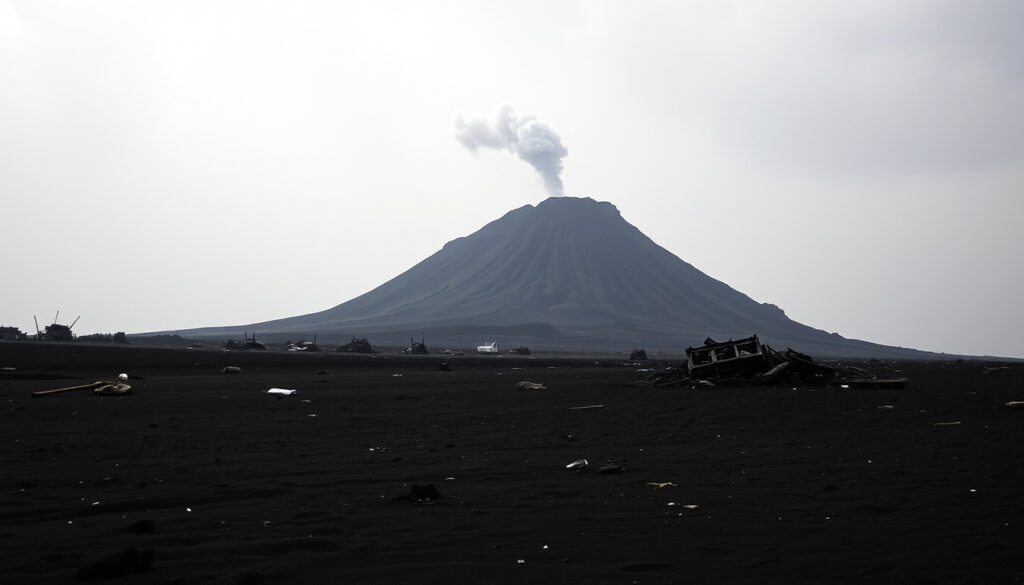
Few battles in American history carry the weight of the Battle of Iwo Jima. It’s a name that conjures images of Marines scrambling up black volcanic sand under relentless fire, and a flag-raising that became a national icon.
Duration: February 19 – March 26, 1945 ·
U.S. Marines Killed: Approximately 6,800 ·
Total U.S. Casualties: Over 26,000 ·
Japanese Soldiers Killed: About 18,800 ·
Japanese Prisoners Captured: 216
Quick snapshot
- Battle lasted 36 days (National Museum of the Marine Corps (official repository))
- U.S. forces suffered 6,871 killed, 19,217 wounded (Naval History and Heritage Command (U.S. Navy))
- Japanese losses: about 18,800 killed, 216 captured (National Museum of the Pacific War (museum dedicated to WWII Pacific theater))
- Exact number of Japanese soldiers who survived in caves beyond 1945
- Detailed breakdown of casualties by specific Marine unit
- Long-term environmental effects of the battle on the island
- Landing on February 19, 1945 (Naval History and Heritage Command)
- Flag raised February 23, 1945 (well documented) (Naval History and Heritage Command)
- Organized resistance ended March 26, 1945 (U.S. Marine Corps (official history))
- Iwo Jima remains a Japanese military base with restricted access (National Museum of the Pacific War)
- Occasional reenactment tours arranged for veterans and families (National Museum of the Pacific War)
- Battle legacy informs modern amphibious warfare doctrine (National Museum of the Pacific War)
Seven key facts, one pattern: the numbers reveal a fight where American casualties nearly matched Japanese losses — a rarity in the Pacific war.
| Label | Value |
|---|---|
| Duration | February 19 – March 26, 1945 |
| Location | Iwo Jima, Volcano Islands, Japan |
| Belligerents | United States vs. Japan |
| Commanders | US: Holland Smith, Harry Schmidt; Japan: Tadamichi Kuribayashi |
| Result | United States victory |
| U.S. Forces | ~70,000 Marines |
| Japanese Forces | ~21,000 soldiers |
Why was the Battle of Iwo Jima so significant?
Strategic importance of the airfields
- Iwo Jima’s two airfields gave U.S. forces a base for emergency landings and fighter escorts. By the end of the war more than 2,400 B-29 bombers had made emergency landings on the island (Truman Library Institute (presidential history research)).
- The island sat roughly halfway between the Mariana Islands and Japan, making it a critical refueling and repair point for the strategic bombing campaign against the Japanese home islands.
Impact on the bombing campaign against Japan
- Before Iwo Jima, B-29 crews flying from the Marianas had no safe spot to land if damaged. The airfields on Iwo Jima saved thousands of aircrew lives and increased bomber effectiveness (The National WWII Museum (educational institution)).
- Fighter escorts based on Iwo Jima could accompany bombers on missions to Japan, providing protection against Japanese interceptors.
Symbolic value of the flag raising
- The raising of the American flag on Mount Suribachi on February 23, 1945, captured in a Pulitzer Prize-winning photograph by Joe Rosenthal, became an enduring symbol of American sacrifice and determination. The image was used to sell war bonds and remains one of the most reproduced photographs in history.
The pattern: Iwo Jima’s airfields delivered tangible military value, but the battle’s true weight lies in its symbolic proof of the cost required to inch toward Japan’s doorstep.
The island’s strategic importance was real, yet the battle’s casualty rate — one American casualty for every one to two Japanese — shocked a nation used to lopsided victories. Admiral Chester Nimitz later said, “Among the men who fought on Iwo Jima, uncommon valor was a common virtue.” (National Museum of the Pacific War)
How many marines died during Iwo Jima?
Breakdown of Marine Corps casualties
- The Naval History and Heritage Command (U.S. Navy archival branch) reports 6,871 U.S. servicemen killed and 19,217 wounded. The National WWII Museum gives a slightly different figure: 6,821 killed.
- The National Museum of the Marine Corps specifies that among Marines, 5,931 were killed in action, died of wounds, or missing and presumed dead, plus 209 Navy medical personnel attached to Marine units.
Comparison to other Pacific battles
- Iwo Jima is often cited as the only major Pacific War battle in which American casualties outnumbered Japanese — but the actual ratio is close to 1:1.7 (U.S. vs. Japanese killed) (National Museum of the Pacific War).
- The battle accounted for one-third of all Marine Corps deaths in World War II (National Museum of the Marine Corps).
Medical evacuation and treatment efforts
- Navy hospital ships and field hospitals treated thousands of wounded under fire. The black volcanic ash made evacuation by vehicle nearly impossible; corpsmen dragged casualties to the beach under constant enemy fire.
The catch: nearly 7,000 dead and 19,000 wounded in 36 days — that’s about 720 American casualties per day, a rate that made Iwo Jima the bloodiest single battle in Marine Corps history.
What happened to the Battle of Iwo Jima?
Initial invasion and landing phase
- On February 19, 1945, the 4th and 5th Marine Divisions landed on beaches covered with black volcanic ash. The first wave faced heavy machine-gun and mortar fire from hidden bunkers. Over 2,400 Americans were killed or wounded on D-Day alone (National Museum of the Pacific War).
- By the end of the first nine days, the advance north had gained just 4,000 yards at a cost of 7,000 U.S. casualties (Naval History and Heritage Command).
Key engagements and turning points
- The flag raising on Mount Suribachi on February 23 signaled the capture of the southern end of the island, but the fight for the northern half was far from over. Japanese defenders under General Tadamichi Kuribayashi had built an elaborate network of caves and tunnels, forcing Marines to clear each position one by one.
- The battle for Hill 362A and the “Meat Grinder” area became synonymous with close-quarters cave warfare.
Declaration of victory and residual fighting
- The U.S. military declared the island secure on March 16, 1945, according to one Navy account (Naval History and Heritage Command). However, a Marine Corps source marks the final end of organized resistance on March 26.
- Small groups of Japanese soldiers continued hiding in caves; some emerged years later, including the last confirmed holdout in 1949.
The implication: the battle did not end on the day declared “secure” — guerrilla resistance continued, a pattern repeated on other Pacific islands.
Did any Japanese survive Iwo Jima?
Number of Japanese prisoners taken
- Of the approximately 21,000 Japanese defenders, only 216 were taken prisoner (National Museum of the Pacific War). Many of those captured were wounded or unconscious when taken.
- The vast majority — roughly 18,800 — were killed in action or chose suicide rather than surrender, following the Japanese military code of the time.
Stories of survivors
- Some Japanese soldiers survived by hiding in caves for weeks after the battle was declared over. A few managed to evade capture for months. The last known holdout from Iwo Jima, Private First Class Tadashi Tominaga, was captured in 1949 — more than four years after the battle ended.
The last holdouts
- Japanese holdouts on Iwo Jima were less common than on other islands like Guam or Peleliu, primarily because Kuribayashi’s plan left few hiding places that could sustain long-term survival. Still, small groups conducted harassment raids until mid-1945.
Why this matters: the 216 prisoners statistic is often cited as evidence of the Japanese willingness to fight to the death, but it also reflects a deliberate strategy that left almost no room for surrender.
Why can’t you visit Iwo Jima?
Japanese military base status
- Today the island, officially called Iwo To (its prewar name), is operated as a Japanese Maritime Self-Defense Force base. Civilian access is strictly controlled (National Museum of the Pacific War).
- The Japanese government requires special permits that are rarely granted except to veterans’ families and official delegations.
Environmental and safety concerns
- Unexploded ordnance remains a serious hazard. The island is littered with live shells and grenades, making unescorted visits dangerous.
- The island’s volcanic terrain and lack of civilian infrastructure also limit tourist access.
Limited reenactment tours
- Occasionally, U.S. veterans’ organizations and the Japanese government coordinate anniversary tours. These are tightly supervised, with visitors required to stay on designated paths. The next major tour is tentatively planned for the 80th anniversary in 2025.
What to watch: as the WWII generation passes, the window for veterans to revisit Iwo Jima is closing. The island may remain restricted for decades to come.
Who won the battle of Iwo Jima?
United States victory and its cost
- The United States captured Iwo Jima after 36 days of fighting. By the end, the island’s airfields were operational and used for the remainder of the war.
- But the victory came at a price that shocked the American public: more than 26,000 total casualties, including nearly 7,000 dead.
Japanese defeat and its implications
- Japan lost the island and nearly all of its 21,000 defenders. For the Japanese high command, the battle demonstrated that American forces could overcome even the most fortified positions, but at enormous cost.
Strategic assessment of the battle
- Despite the victory, many historians argue Iwo Jima did not meaningfully shorten the war. The bombing campaign against Japan was already intensifying, and the atomic bomb was only months away. Truman Library Institute notes that the island was primarily envisioned as a staging point for an invasion of the Japanese home islands — an invasion that never happened.
The trade-off: the U.S. won a tactical victory and a powerful symbol, but at a human cost that continues to be debated as out of proportion to the strategic gain.
“The battle of Iwo Jima was the most savage and costly battle in Marine Corps history.”
Lt. Gen. Holland M. Smith, U.S. Marine Corps, quoted by Naval History and Heritage Command
“Among the men who fought on Iwo Jima, uncommon valor was a common virtue.”
Admiral Chester Nimitz, quoted by National Museum of the Pacific War
“I am resolved to defend this island to the last. I expect no return alive.”
General Tadamichi Kuribayashi (from his final message to Tokyo), cited by The National WWII Museum
Timeline of the Battle of Iwo Jima
- February 19, 1945: U.S. Marines land on Iwo Jima (Naval History and Heritage Command)
- February 23, 1945: Flag raised on Mount Suribachi
- March 16, 1945: Island declared secure by U.S. military (Naval History and Heritage Command)
- March 26, 1945: Last major organized Japanese resistance ends (U.S. Marine Corps)
- 1968: Iwo Jima returned to Japan
Clarity: what we know and what remains unclear
Confirmed facts
- Battle dates: February 19 – March 26, 1945
- U.S. casualties: 6,800+ killed, 19,000+ wounded
- Japanese casualties: ~18,800 killed, 216 captured
- Island now a Japanese military base with restricted access
What’s unclear
- Exact number of Japanese soldiers who survived in caves beyond 1945
- Detailed breakdown of casualties by specific Marine unit
- Long-term environmental effects of the battle on the island
For the U.S. Marine Corps, the lesson of Iwo Jima is clear: amphibious assaults against heavily fortified islands exact a grim price. The battle’s legacy continues to shape modern doctrine on combined arms and casualty planning.
en.wikipedia.org, history.navy.mil, youtube.com, pacificwarmuseum.org, youtube.com, facebook.com
Frequently asked questions
What was the role of the U.S. Navy in the Battle of Iwo Jima?
The Navy provided naval gunfire support, transported Marines, and operated hospital ships. Over 800 Navy medical personnel served on the island, and the Navy’s bombardment preceded the amphibious landing.
How many Medals of Honor were awarded at Iwo Jima?
27 Medals of Honor were awarded for actions during the Battle of Iwo Jima — more than any other single battle in U.S. history, including 22 to Marines, 4 to Navy personnel, and 1 to a Coast Guardsman.
Were there any civilians on Iwo Jima during the battle?
No. The Japanese military had evacuated all civilians from Iwo Jima before the invasion. The island was a military garrison.
What is the current status of Iwo Jima?
The island is a Japanese Maritime Self-Defense Force base, officially called Iwo To. Public access is restricted and requires special permission.
How did the Japanese prepare their defenses on Iwo Jima?
General Kuribayashi ordered the construction of an extensive tunnel and cave system, with over 11 miles of interconnected passages. Artillery and machine guns were placed in hardened positions, and the beaches were zeroed in for deadly crossfire.
What is the difference between Iwo Jima and Iwo To?
Iwo Jima is the name given by U.S. forces; Iwo To is the original Japanese name. In 2007, Japan officially renamed the island Iwo To, though both names are still used.
Is there a memorial on Iwo Jima?
Yes. The U.S. Marine Corps War Memorial in Arlington, Virginia, is based on the Iwo Jima flag-raising photograph. On the island itself, there are Japanese memorials and a small U.S. monument.
How did the Battle of Iwo Jima affect the decision to use atomic bombs?
The high casualty rate at Iwo Jima and the ongoing Battle of Okinawa (which was even costlier) convinced U.S. planners that an invasion of the Japanese home islands would result in a million or more Allied casualties. This context played a role in the decision to use atomic weapons against Hiroshima and Nagasaki.
More related posts
 Dutch Bros Near Me: Menu, Prices & Locations Guide
 How to Play Wordle: Rules, Best Words & Strategy Tips
 EltaMD Tinted Sunscreen Review: Worth It? Dupes & Comparison 2025
 Gorr the God Butcher: Powers, Origin, and Movie Explained
 What Is Cephalexin Used For? Uses, Dosage & Side Effects
 The Four Seasons Netflix: Season 2, Cast, Plot & Reviews
 Harry Potter and the Sorcerer’s Stone Cast: Complete List
 Indiana Fever vs Dallas Wings: Player Stats & Score
