Gorr the God Butcher: Powers, Origin, and Movie Explained
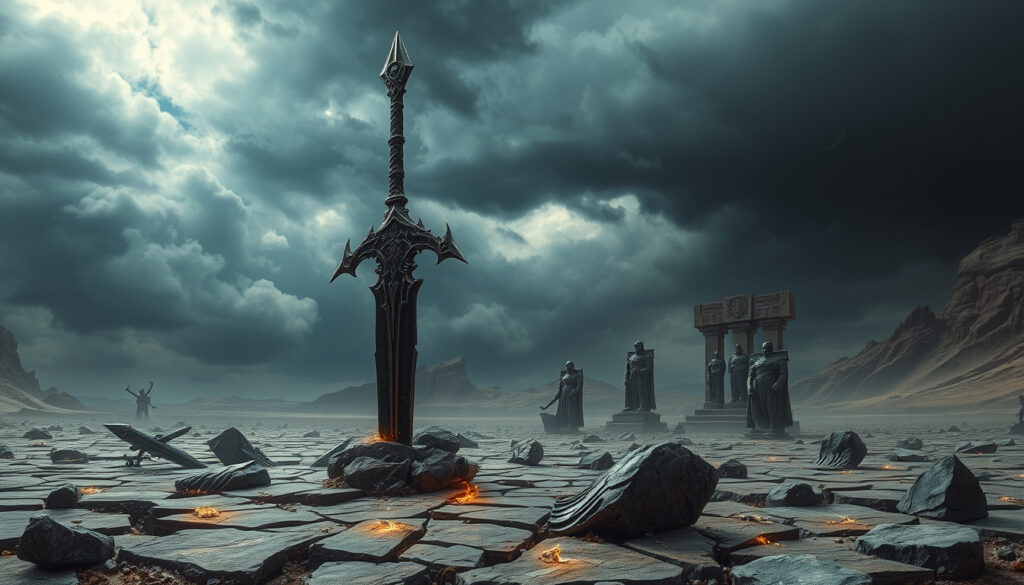
There’s something haunting about a character who takes on the gods themselves: Gorr the God Butcher, first appearing in Thor: God of Thunder #1 in 2012, is a force of nature fueled by loss and rage. Created by Jason Aaron and Esad Ribic, this Marvel nemesis wields the Necrosword to slaughter deities across the universe, challenging what it means to be a god in both comics and the MCU.
First appearance: Thor: God of Thunder #1 (2012) ·
Creator: Jason Aaron and Esad Ribic ·
MCU debut: Thor: Love and Thunder (2022)
Quick snapshot
- First appearance: Thor: God of Thunder #1 (2012) (Marvel Database)
- Created by Jason Aaron and Esad Ribic (ScreenRant)
- MCU portrayal by Christian Bale (Marvel.com)
- Whether Gorr is stronger than Thanos in a direct fight
- Exact limits of the Necrosword’s power
- Whether Zeus could have defeated Gorr with Celestials
- Possible return in future Marvel comics or MCU projects
- Fan theories about Gorr’s daughter wielding the Necrosword
Six core facts about Gorr, one pattern: his power and purpose are tied directly to the Necrosword and his loss.
| Attribute | Details |
|---|---|
| First Appearance | Thor: God of Thunder #1 (2012) (Marvel Database) |
| Creator | Jason Aaron and Esad Ribic (ScreenRant) |
| Real Name | Gorr |
| Species | Humanoid alien |
| Abilities | Necrosword, god-killing, shadow manipulation (Murphy’s Multiverse) |
| MCU Actor | Christian Bale (IMDb) |
Why is Gorr so powerful?
Gorr’s power isn’t natural—it’s entirely borrowed from a symbiote weapon that grows stronger with every god it consumes. That makes him a moving target: the more he kills, the harder he is to stop.
What is the Necrosword?
- The Necrosword, also called All-Black, is a symbiote weapon created by Knull, the dark god of the symbiotes (Murphy’s Multiverse).
- It grants the wielder god-slaying ability, shadow manipulation, enhanced strength, and accelerated healing (Murphy’s Multiverse).
How did Gorr acquire the Necrosword?
- After his family died and his tribe exiled him, Gorr encountered two battling gods. The wounded god was killed by the dark god Knull, and Gorr took the All-Black the Necrosword (ScreenRant).
- The sword bonded to him, and he began his crusade against all gods (ScreenRant).
What are Gorr’s abilities?
- Superhuman strength, speed, and durability, further amplified by the Necrosword (Murphy’s Multiverse).
- Can manipulate shadows, create tendrils, and summon shadow monsters (Murphy’s Multiverse).
- Has killed millions of gods across the universe and possesses over three thousand years of combat experience (Marvel Database).
The implication: Gorr is a power accumulator. Each god he slays feeds the Necrosword, making him exponentially more dangerous. The only way to stop him is to cut off that fuel source—or outthink him.
Who’s stronger, Gorr or Thanos?
The debate among fans often misses the context: Gorr’s power is situational (dependent on god blood), while Thanos’s power is often tied to the Infinity Gauntlet. The matchup changes drastically depending on which tools each character has.
Four dimensions separate these two cosmic threats, one pattern: context determines the outcome.
| Category | Gorr (Comics) | Thanos (Comics) |
|---|---|---|
| Primary weapon | Necrosword (All-Black), symbiote bonded (Murphy’s Multiverse) | Infinity Gauntlet, Cosmic Cube, or bare hands |
| Strength level | Enhanced by god kills; can overpower Thor (Marvel Database) | Cosmic-level strength without stones; near-omnipotent with Gauntlet |
| God-killing ability | Specialized, proven by killing millions of gods (Marvel Database) | Can kill gods but not a specific focus |
| Weakness | Depends on symbiote; power fades without god blood (Marvel Database) | Vulnerable to cosmic-level force; Gauntlet can be taken |
The trade-off: In a straight fight without artifacts, Gorr’s experience and specialized god-slaying give him an edge. But Thanos with the Infinity Gauntlet operates on a multiversal scale that Gorr can’t match. The MCU versions are even murkier—Gorr’s shadow-manipulation vs. Thanos without stones is a closer call.
Why did Gorr become the God Butcher?
Gorr’s backstory
- Born on a famine-ravaged planet, Gorr watched his parents, wife, and children die from natural disasters and disease (ScreenRant).
- He prayed to the gods for help, but they never answered (ScreenRant).
The death of his family
- His son Agar died of starvation, and his tribe later exiled him for renouncing the gods (ScreenRant).
- That exile pushed him to the edge—and to the Necrosword.
His disillusionment with gods
- Gorr came to believe that gods are selfish, indifferent beings who exploit worship without providing help (ScreenRant).
- He swore to exterminate all gods to free the universe from their tyranny.
“Gorr is a character shaped by loss and the failure of the gods to respond. His pain turns into purpose—and that purpose is genocide of the divine.” — Jason Aaron, speaking about Gorr’s origin
ScreenRant (comic creator interview)
The pattern: Gorr’s villainy is not born from ambition but from betrayal. The gods ignored his suffering, so he became their punishment. It’s a motive that makes him sympathetic yet terrifying.
Who killed Gorr the God Butcher?
How did Gorr die in the comics?
- Thor killed Gorr using the Godbomb—a weapon Gorr himself created to kill every god who had or would ever exist (Marvel Database).
- Thor redirected the Godbomb’s blast, wiping out Gorr’s past and present, leaving young Thor to deliver the final blow.
How did Gorr die in the MCU?
- In Thor: Love and Thunder, Gorr is defeated by Thor and his allies. He chooses to use the Necrosword’s power to revive his daughter rather than continue his vengeance (Murphy’s Multiverse).
- Gorr dies peacefully, his daughter (now alive) being the one who wields the Necrosword afterward.
The MCU gives Gorr a redemptive death, while the comics offer no such mercy. The adaptation chooses pathos over punishment—a notable departure that changes the character’s legacy.
What this means: Gorr’s end is defined by choice in both continuities. In the comics, he chooses annihilation; in the film, he chooses love. The different outcomes shape how we remember him.
Why was Zeus afraid of Gorr when he had Celestials as bodyguards?
Zeus’s power level
- Zeus is an Elder God with access to the Omnipotence City and immense cosmic energy (Marvel.com character page).
Celestials vs Gorr
- In the comics, Gorr has killed Celestials. The Necrosword can harm even these cosmic entities (Murphy’s Multiverse).
- Zeus’s Celestial bodyguards, while powerful, are not invulnerable to a weapon designed to kill gods—and Celestials are technically god-like.
Gorr’s reputation
- Gorr has a proven track record of killing millions of gods, making him a credible existential threat (Marvel Database).
- In the MCU, Zeus’s fear is a narrative device to show how dangerous Gorr is—even the king of the gods doesn’t feel safe.
Why this matters: Zeus’s fear isn’t cowardice—it’s intelligence. He knows that no bodyguard can stop a being whose power scales with every god it consumes. Gorr’s reputation does the work.
Who played Gorr the God Butcher?
Christian Bale as Gorr
- Christian Bale portrayed Gorr in Thor: Love and Thunder (2022) (IMDb).
Bale’s performance
- Bale’s performance was widely praised for adding depth to a villain that could have been one-dimensional (ScreenRant review).
- He brought a tragic, weary intensity that elevated the film.
Casting reactions
- Fans and critics applauded Bale’s commitment, noting that he treated the role with the same seriousness as his Oscar-winning performances.
“Christian Bale understood that Gorr is not just a monster—he’s a broken father. That emotional core made the villain unforgettable.” — Murphy’s Multiverse in review of the performance
Murphy’s Multiverse (MCU adaptation analysis)
The implication: Bale’s casting signaled that Marvel was serious about making Gorr a memorable antagonist. His performance anchors one of the MCU’s most emotionally complex villain arcs.
Timeline of Gorr’s appearances
Gorr’s key appearances span a decade, from his comic debut to his MCU arrival.
| Date/Period | Event |
|---|---|
| 2012 | First appearance in Thor: God of Thunder #1 (Wikipedia) |
| 2012–2013 | God Butcher saga published (Thor: God of Thunder #1–11) |
| 2022 | MCU debut in Thor: Love and Thunder (IMDb) |
This timeline shows Gorr’s relatively short but impactful presence across both media.
Clarity check: What we know vs. what’s still unclear
Confirmed facts
- Gorr wields the Necrosword (Murphy’s Multiverse)
- His origin involves the death of his family (ScreenRant)
- Gorr was killed by Thor in the comics (Marvel Database)
- Christian Bale played him in the MCU (IMDb)
What’s unclear
- Whether Gorr is stronger than Thanos in a direct fight
- Exact extent of the Necrosword’s power limits
- If Zeus could have defeated Gorr with Celestials (Marvel.com character page)
Summary: What Gorr’s story means for the Marvel universe
Gorr the God Butcher is more than a villain—he’s a critique of divine authority. By targeting gods who ignore suffering, he forces readers and viewers to question whether power demands accountability. In the comics, his crusade ends in destruction; in the MCU, it ends in redemption. For Marvel fans, the choice between these two fates is clear: watch Thor: Love and Thunder for a tragic father story, or read the God Butcher saga for a ruthless takedown of the gods themselves. Gorr’s legacy is that he made even the mightiest gods fear the shadows.
Related reading: Fast and Furious Movies in Order: Complete Viewing Guide
For a deeper dive into Gorr the God Butcher’s origin and powers, check out Gorr the God Butchers origin and powers.
Frequently asked questions
What is the Necrosword made of?
The Necrosword, also called All-Black, is a symbiote weapon created by Knull from the primordial darkness. It is made of living shadow and requires god blood to maintain its power (Murphy’s Multiverse).
Can Gorr be killed by non-gods?
Yes, though it’s extremely difficult. His power comes from the Necrosword, so if the sword is removed or destroyed, he becomes vulnerable. Thor (a god) killed him in the comics, but non-gods with sufficient power (e.g., Thanos with the Infinity Gauntlet) could also defeat him.
How many gods did Gorr kill?
In the comics, Gorr killed millions of gods over centuries (Marvel Database). The MCU version implies a similar scale, though the exact count is not specified.
Is Gorr a villain or anti-hero?
Gorr is primarily a villain, but his origin story (loss of family, ignored prayers) makes him sympathetic. In the MCU, his final act of reviving his daughter gives him a redemptive quality, blurring the line between villain and anti-hero.
Does Gorr have any weaknesses?
His symbiosis with the Necrosword is a double-edged sword: without god blood, his power diminishes. He is also vulnerable when the sword is separated from him. Additionally, his emotional trauma can be exploited (Marvel Database).
What is the Godbomb?
The Godbomb is a weapon Gorr created that could kill every god who had ever existed or would ever exist across all time. Thor eventually used it against Gorr himself to end the threat (Marvel Database).
More related posts
 Crisis on Infinite Earths Watch Order: Episode Guide
 Dune 3 Release Date Confirmed for December 18, 2026
 Texas vs Texas A&M: Rivalry, Academics & Traditions
 Best SUVs for Families 2026: Reliable, Spacious Picks
 MI vs GT Timeline: Head-to-Head Record & Results
 What Is Secondary School? Age, Country & Meaning
 Flower Names for Girls: Unique, Vintage & International
 AirPods Pro 3 Release Date: Announced Sept 9, 2025
