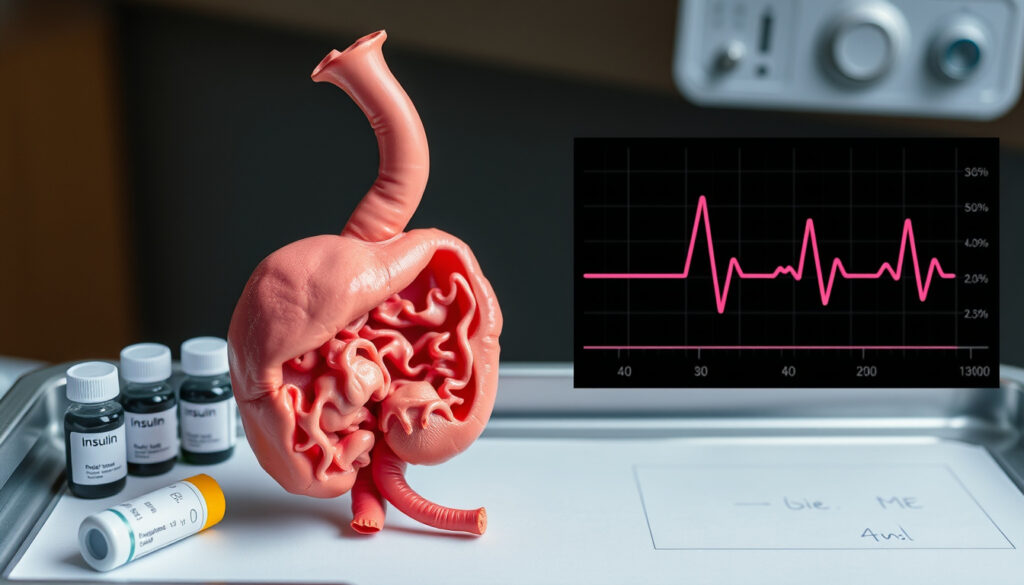
Can You Live Without a Pancreas? Survival and Life Expectancy
Survival without a pancreas is possible with lifelong medical management, though the adaptation demands daily diligence with enzyme supplements and insulin therapy. Data shows post-surgical outcomes vary widely based on the reason for removal, with cancer patients facing steeper survival curves than those with noncancerous conditions.
Survival possible: with enzyme replacement and insulin · Primary functions lost: digestion enzymes and blood sugar regulation · Common reason for removal: pancreatic cancer or severe pancreatitis · Management required: lifelong pancreatic enzyme supplements · Associated risks: brittle diabetes and malnutrition
Quick snapshot
- Pancreatectomy survivable with therapy (Healthline)
- Enzymes essential for digestion — replacement is lifelong (United Digestive)
- Exact life expectancy varies widely by individual factors
- Longest documented survival without pancreas remains undocumented
- Lifelong insulin therapy required for blood sugar control
- Continuous glucose monitoring and dietary adjustments essential
- 76% 7-year survival for noncancerous conditions (Healthline)
- 65% 3-year survival overall after total pancreatectomy (PMC)
These figures come from clinical research across multiple centers, spanning both cancer and noncancer patient groups.
| Fact | Details |
|---|---|
| Possible to live without? | Yes, with medical support |
| Enzyme replacement needed | Lifelong capsules |
| Diabetes outcome | Type 1-like brittle diabetes |
| Top removal reason | Cancer or pancreatitis |
Can you live without a pancreas? What you need to know
The short answer is yes — you can survive without a pancreas, but the survival comes with conditions attached. The pancreas performs two critical functions: it produces digestive enzymes that break down food in the small intestine, and it regulates blood sugar through insulin secretion. Without the organ, both systems need mechanical replacement for life.
Medical research confirms this possibility. “You can live without your pancreas, but you’ll have to take medicines to replace what it does in your body,” wrote Healthline (medically reviewed publication). Enzyme tablets taken with meals substitute for the digestive function, while insulin injections or pumps handle blood sugar regulation.
Immediate effects of pancreatectomy
The body responds immediately to pancreas removal. Without natural insulin production, blood sugar levels become unstable and require external insulin management from day one. Digestive enzyme deficiency manifests as malabsorption — food passes through the system without proper nutrient extraction, leading to weight loss and nutritional gaps if not addressed with enzyme supplements.
The median hospital stay after total pancreatectomy is 11 days, with one day in intensive care, according to PMC (peer-reviewed medical research). This gives the medical team time to stabilize glucose levels and establish an enzyme replacement protocol before discharge.
Long-term survival factors
Survival depends heavily on why the surgery was performed. For noncancerous conditions like chronic pancreatitis, seven-year survival reaches 76%. For pancreatic cancer patients, that figure drops to 31% over the same timeframe, according to Healthline data. The difference reflects cancer biology more than surgical outcomes — the disease often returns regardless of how much pancreas remains.
Age and comorbidities also influence perioperative survival. Older patients, males, and those with additional health conditions face higher mortality risk, according to PMC (national mortality analysis). Access to high-volume surgical centers matters significantly: the shift to specialized hospitals contributed roughly 25% to the mortality decline observed between 1998 and 2003.
“You can live without your pancreas, but you’ll have to take medicines to replace what it does in your body.”
— Healthline (medically reviewed health publication)
“Excess mortality in low-to-middle-HDI countries could be attributable to failure to rescue of patients from severe complications.”
— British Journal of Surgery (global surgical outcomes research)
“Living without a pancreas can be challenging but with proper medical care and treatment, it is possible to live a relatively normal life.”
— Dr Praveen Kammar (surgical practice)
The implication is stark: the reason for surgery predicts survival more accurately than the absence of the organ itself.
What happens when the pancreas is removed?
Removing the pancreas triggers two major systems to fail simultaneously. The endocrine function — insulin production — stops immediately, creating what doctors call brittle diabetes. Unlike standard Type 1 diabetes, this form produces extreme blood sugar swings that are harder to control because the body has no baseline insulin response whatsoever.
The exocrine function — enzyme production — also ceases. Without pancreatic enzymes, the small intestine cannot absorb fats, proteins, and certain vitamins properly. The result is often greasy, bulky stools and progressive malnutrition if enzyme replacement is not taken consistently with every meal and snack.
Loss of digestive enzymes
The pancreas normally secretes enzymes including lipase (fat digestion), protease (protein digestion), and amylase (carbohydrate digestion). After surgery, patients must take enzyme capsules — typically derived from pig or synthetic sources — with each meal containing fats or proteins.
Post-pancreatectomy patients face documented risks of nutritional deficiencies in vitamins A, D, E, and K, according to United Digestive (gastroenterology practice). These fat-soluble vitamins require proper enzyme function for absorption, and without supplementation, deficiencies develop over months.
Onset of diabetes
The diabetes that follows total pancreatectomy is particularly challenging. Patients require insulin therapy and continuous glucose monitoring, according to United Digestive. Unlike Type 2 diabetes, there is no residual insulin production to provide any buffer — even small mistakes in insulin dosing can trigger severe hypoglycemia.
Thirty-day major morbidity after total pancreatectomy is 19% with 2% mortality, according to PMC (single-center survival data). Diabetes management complications feature prominently in these morbidity figures.
Brittle diabetes from pancreatectomy demands more vigilant glucose monitoring than typical diabetes. Patients need continuous glucose monitors and careful insulin titration — a miscalculation carries immediate life-threatening consequences.
For cancer patients, the trade-off is stark: trading the pancreas for survival means accepting permanent diabetes and enzyme dependency. For pancreatitis patients, relief from constant pain may outweigh the long-term management burden.
What is the life expectancy after having your pancreas removed?
Life expectancy after pancreatectomy varies enough that single numbers can mislead. The most important factor is the underlying condition — cancer versus chronic pancreatitis, cancer stage, patient age, and post-surgical management quality all play roles. Researchers have compiled survival data across multiple studies that provide realistic benchmarks.
For chronic pancreatitis surgery specifically, five-year survival is 81% and ten-year survival is 64%, with a median death age of 51, according to STAT News (analysis of 2000-2020 surgery trends). These numbers reflect patients who underwent drainage or resection procedures for pain management.
Factors affecting survival
Hospital volume emerges as one of the strongest predictors of surgical survival. Pancreatic surgery mortality has decreased to 0-3% in high-volume, high-HDI centers, according to British Journal of Surgery (global multicentre study). In contrast, low-to-middle HDI countries show 90-day postoperative mortality adjusted odds ratio of 2.88 compared to very high HDI nations.
The failure-to-rescue phenomenon explains much of this disparity. In low-to-middle HDI countries, the failure-to-rescue rate after pancreatic surgery is 41% versus 19% in very high HDI countries, according to British Journal of Surgery. This means complications that would be managed successfully in advanced hospitals prove fatal where critical care resources are limited.
Comparison to general population
One-year survival after total pancreatectomy reaches 80% overall, with two-year survival at 72%, according to PMC. Three-year survival drops to 65% overall but falls to 34% for pancreatic adenocarcinoma specifically.
Thirty-day mortality shows minimal difference between total and partial pancreatectomy: 5.6% versus 4.2% respectively, according to PMC (total versus partial comparison). Median survival is also similar: 16.5 months for total versus 16.9 months for partial pancreatectomy. The surgical extent matters less than the underlying disease.
What are the first signs of a bad pancreas?
Recognizing pancreas problems early can prevent the cascade that leads to surgery. The organ sits behind the stomach, so pain often radiates to the back or flanks. Understanding warning signs helps patients seek care before damage becomes irreversible.
Early symptoms of pancreatitis
Abdominal pain is the most common early sign of pancreas problems, typically starting in the upper abdomen and radiating backward. The pain often worsens after eating, especially after meals high in fats. Nausea and vomiting frequently accompany the pain, and eating becomes avoidance behavior as the patient learns that food triggers discomfort.
Weight loss without trying is another red flag, often linked to malabsorption from impaired enzyme production. Patients may notice fatty stools that float and smell worse than normal — this indicates fat is passing through undigested.
Red flags requiring attention
Certain symptoms demand immediate medical attention. Sudden onset of severe abdominal pain combined with fever suggests infection or acute pancreatitis. Yellowing of the skin or eyes (jaundice) indicates bile duct obstruction, often from pancreatic tumors. Persistent vomiting that prevents any food intake can lead to dehydration and electrolyte imbalances.
New-onset diabetes in adults, particularly without typical risk factors like obesity, sometimes indicates pancreatic dysfunction. If pancreas problems run in the family or if multiple relatives have had pancreatic cancer, any new digestive or metabolic symptoms warrant prompt investigation.
Upper abdominal pain radiating to the back, combined with nausea after fatty meals, is the classic presentation of pancreatitis. Ignoring these symptoms allows the disease to progress — early intervention preserves more pancreatic tissue.
Diet After Pancreatic Surgery
Diet adaptation after pancreas removal is not optional — it is essential for survival. Without proper enzyme replacement and nutritional management, the body cannot maintain weight, immune function, or energy levels. Most patients need to eat smaller, more frequent meals and take enzymes with every food intake.
Foods to avoid
Alcohol is the most critical restriction. The liver processes alcohol, and without pancreatic enzymes to aid digestion, alcohol toxicity hits harder and faster. Post-pancreatectomy patients face compound risk because the liver already compensates for multiple metabolic functions. Continued alcohol use after surgery accelerates liver damage and nutritional deterioration.
High-fat foods are difficult to digest without adequate enzyme support. Foods like fried items, heavy cream sauces, and fatty cuts of meat require substantial enzyme quantities that patients may struggle to dose correctly, especially early after surgery. Processed foods with hidden fats also cause problems.
Simple sugars require careful insulin matching — large glucose loads without proportional insulin cause dangerous spikes. Patients must learn to match carbohydrate intake to insulin dosing, a constant balancing act that becomes intuitive only with practice and monitoring.
Supportive nutrition options
Protein-rich foods support tissue repair and immune function. Lean proteins like chicken, fish, and eggs are better tolerated than fatty cuts. Plant-based proteins work well when combined with enzyme supplements.
Medium-chain triglycerides (MCTs) are fats that absorb more directly without full enzyme , making them useful supplements for patients struggling with weight maintenance. Coconut oil contains natural MCTs.
Small, frequent meals reduce the digestive burden compared to three large meals. Most post-pancreatectomy nutritionists recommend 5-6 smaller meals spaced throughout the day with enzyme dosing matched to each.
Post-surgery diet is a medication regimen in disguise — every meal is a dosing decision. Patients who treat food as a medical protocol rather than casual eating maintain better outcomes and fewer complications.
Upsides
- Surgery can eliminate cancer or chronic pain that damages quality of life
- Survival is possible with proper medical management and enzyme/insulin therapy
- High-volume centers achieve 0-3% mortality — excellent surgical safety when care is optimized
- Many patients adapt and live relatively normal lives with proper support systems
Downsides
- Brittle diabetes requires constant insulin management and monitoring
- Enzyme deficiency causes malabsorption and fat-soluble vitamin deficiencies
- Dietary restrictions are lifelong and affect daily quality of life
- Failure-to-rescue complications prove fatal more often in lower-resource settings
Related reading: What Is Considered a Fever? Adult & Child Thresholds · What Is Cephalexin Used For? Uses, Dosage & Side Effects
Life expectancy after pancreas removal hinges on replacing key functions and disorders, since the organ regulates digestion and blood sugar control.
Frequently asked questions
Can you live without a pancreas and liver?
No — the liver performs essential detoxification and metabolic functions that cannot be replaced mechanically, unlike pancreatic enzyme and insulin production. The liver is not removable. Patients with liver damage alongside pancreatic issues face compounded challenges, but liver failure itself is incompatible with survival without transplantation.
What foods trigger pancreatitis?
Fatty foods are the primary triggers because they require the most pancreatic enzyme activity to digest. Alcohol is the second major trigger, especially when consumed in large quantities or on an empty stomach. High-protein diets are generally better tolerated than high-fat approaches during pancreatitis recovery.
Can you drink alcohol after having your pancreas removed?
Alcohol is strongly discouraged after pancreas removal. Without pancreatic enzymes, alcohol absorption accelerates and causes more intense intoxication. More importantly, continued alcohol use stresses the liver, which already compensates for missing pancreatic functions. Patients who continue drinking after surgery face compounded organ damage.
What are 10 amazing foods to heal your pancreas?
The pancreas cannot regenerate significant tissue after damage, so no diet “heals” it. However, foods that are easy to digest and rich in antioxidants may support overall pancreatic health: lean proteins, cruciferous vegetables, turmeric, ginger, garlic, blueberries, spinach, sweet potatoes, yogurt with probiotics, and green tea. None of these reverse surgical removal.
How many years can a person live without pancreas?
The question cannot be answered with a single number because survival depends entirely on the reason for surgery, the patient’s age, comorbidities, and how well they manage post-operative care. Chronic pancreatitis patients achieve 81% five-year survival; cancer patients face 31% seven-year survival. With modern management, many patients survive a decade or more.
What is the red flag for pancreatitis?
The classic red flag is sudden severe upper abdominal pain radiating to the back, particularly after eating or drinking. This pain often improves when leaning forward and worsens lying flat. Accompanied by nausea, vomiting, and fever, these symptoms demand immediate medical evaluation — acute pancreatitis is a medical emergency.
Can you live without a pancreas reddit?
Reddit communities like r/pancreatitis and r/Diabetes include patients sharing lived experiences with total pancreatectomy. Community reports suggest the adaptation period is difficult — managing brittle diabetes and enzyme timing requires months of adjustment. Long-term community members report reaching stable routines, but emphasize that the learning curve is steep and medical guidance is essential.
For patients facing this surgery, the path forward requires accepting a new normal: permanent enzyme supplements with every meal, insulin dosing matched to food intake, and regular monitoring. Those who approach post-surgical life as a medical protocol — not a temporary adjustment — tend to maintain better outcomes and quality of life. The surgery removes a threat; the management keeps the threat from returning.
More related posts
 How to Play Wordle: Rules, Best Words & Strategy Tips
 Elon Musk Kids Names: Full List and Pronunciation
 AirPods Pro 3 Release Date: Announced Sept 9, 2025
 McDonald’s Near Me: Find Locations, Hours, Menu & Prices
 Dish Network Phone Number – 800-333-3474 and Support Tips
 Right Side Chest Pain: Causes and When to Worry
 Lymphatic Drainage Massage Near Me – Benefits, Sessions and Therapist Guide
 Real Estate Agents Near Me: Fees, Red Flags & Market Timing
